The School of Technology, Engineering, Mathematics and Physics (STEMP) is thrilled to share the exceptional performance of two student teams that represented our region at the 2025 Humanitarian Innovation Hackathon (HIH).
The Hackathon was hosted by the University of Sydney on 18-20 July.
The theme and specific challenges of this year’s competitive global event, based on Sustainable Development Goals (SDGs), brought together over 100 teams of undergraduate students from national and international universities in Australia, New Zealand, and the Pacific Islands region to address real-world humanitarian challenges related to SDG#2 – Zero Hunger.
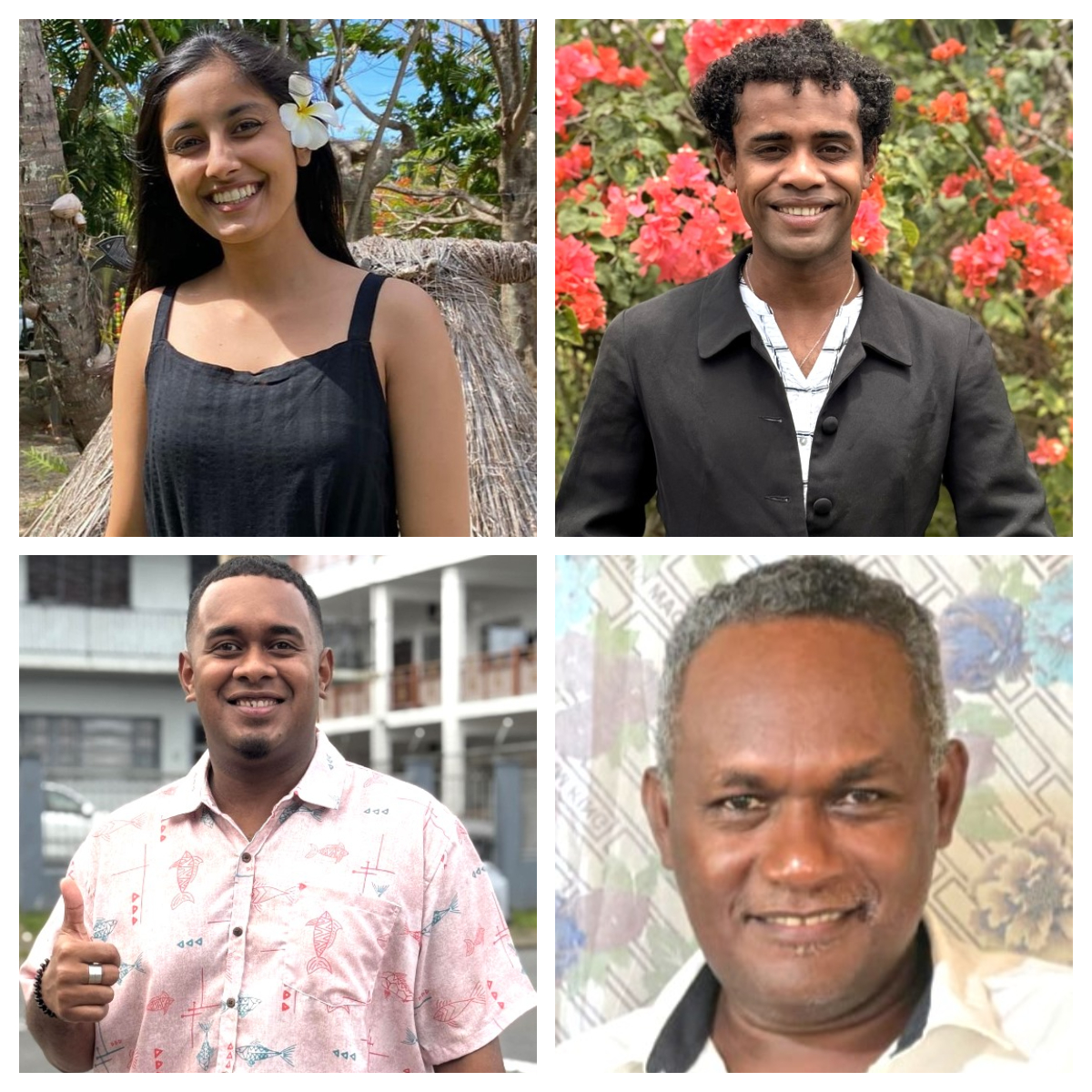
Team Oceanic Innovators and Team Viti Dominators, each made up of three motivated and brilliant The University of the South Pacific (USP) students, volunteered to take on the task under the mentorship of Gavin Khan, Salsabil Nusair and Krishan Kumar of the Discipline of Computing Science and Information Systems.
Based on local realities, the students used technological and engineering approaches to develop conceptual solutions to practical agricultural problems faced in the region.
Finalist Spotlight: Oceanic Innovators
Led by Rosa Turagavou, with team members Naayaab Bin Sarfraaz and Lydia Garae, Team Oceanic Innovators was one of the select few shortlisted as finalists of the intense 48-hour competition. Their innovation, “SugaProof” is a low-cost, farmer-owned freshness scoring device designed to address post-harvest sugarcane degradation in Fiji’s sugar industry, where over 21,000 farmers depend on cane for their livelihood.
Developed in response to challenges like delayed transport, lack of transparency, and income loss, the device uses sensors to log temperature, humidity, CO₂ levels, and time, generating a freshness score out of 100 enabling farmers to prove cane quality and demand fair payments.
Designed to be affordable and sustainable, “SugaProof” supports SDG-2 (Zero Hunger), promotes transparency, discourages harmful practices like burning cane prior to harvesting and is scalable to other crops.
Innovation with Purpose: Viti Dominators
Team Viti Dominators, consisting of Shahil Singh, Jitanshika Kumar, and Rahul Chand tackled the issue of soil salinity and nutrient deficiency, which poses a serious threat to agricultural productivity across many Pacific Island nations.
Their solution “Soilnity” is a hybrid model combining traditional green manuring and biochar from coconut shells, activated in traditional lovo pits.
To complement their sustainable soil enhancement technique, the team also designed a solar-powered ESP32-based device that delivers instant, audio-guided feedback to farmers based on soil salinity levels. This farmer-friendly solution provides real-time guidance on when to take corrective action without requiring technical or digital skills.
Oceanic Innovators selection as one of the finalist teams demonstrates the talent creativity and determination of USP students.
It also highlights the power of youth-led innovation and the importance of fostering humanitarian values in STEM education to make a positive change in our pacific communities; a goal USP proudly supports.
USP congratulates both teams on their brilliant ideas, hard work, and collaborative efforts and also acknowledges the Head of School (STEMP & SAGEONS) Professor Bibhya Sharma and his staff for the support provided in ensuring the success of this achievement.
Let’s continue to encourage and celebrate student innovation as we work together towards a more sustainable and resilient South Pacific region.
The Hackathon Winner’s Announcement will be made on World Humanitarian Day – 19 August 2025 during the awards ceremony in Australia.
To watch the video of the finalists’ projects and learn more about the Humanitarian Innovation Hackathon visit: hack-eng.sydney.edu.au