Monthly Update – August 2025
Careers, Teachers, and Principals’ Expo
Dr. David Rohindra, Dept. Actg. HOS for SAGEONS represented both STEM and SAGEONS at the Careers Teachers and Principals’ Expo, which was held in Labasa, Lautoka, and Laucala. Below is the dates, number of schools represented, and number of participants that attended.
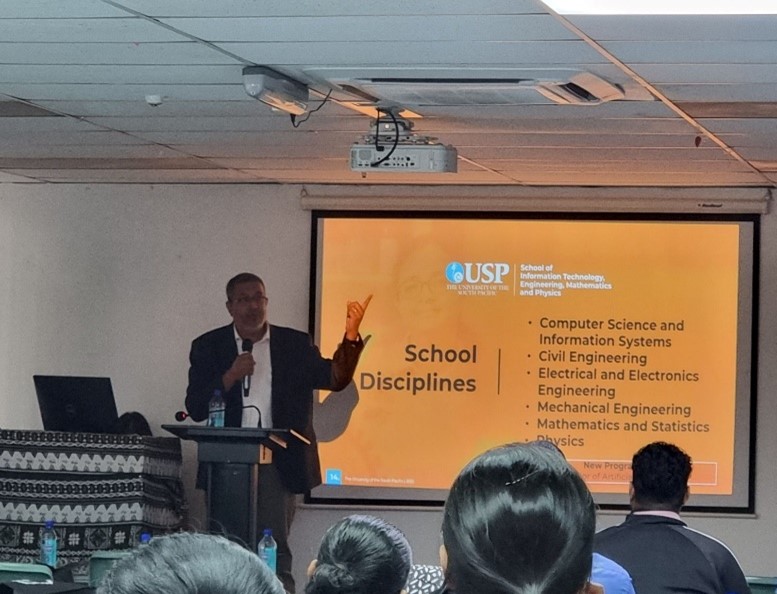
| Labasa – 28 July | Lautoka – 30 July | Laucala – 1 Aug |
| Participants – 45 | Participants – 68 | Participants- 53 |
| Schools – 27 | Schools – 31 | Schools- 45 |
USP Open Day – August 2025
The Open Day was a great success, showcasing the wide range of programs offered across the different disciplines. The Department of Biological and Chemical Sciences presented its innovative courses in areas such as microbiology, biochemistry, and analytical chemistry, highlighting opportunities for hands-on laboratory experience. The Geographical and Environmental Sciences team engaged students with interactive displays on climate change, natural resource management, and geographic information systems (GIS). Meanwhile, the Agricultural Sciences department impressed guests with its focus on sustainable farming practices, crop science, and food security research. Overall, the event provided an inspiring look into the diverse academic pathways and real-world applications offered within each discipline.
Click on the link below for pictures of the day.
OD: https://www.usp.ac.fj/usp-sageons/saegons-open-day-2025-gallery/
Monthly Update – September 2025
GE201 Field Trips – Sigatoka Sand Dunes and Mount Korobaba
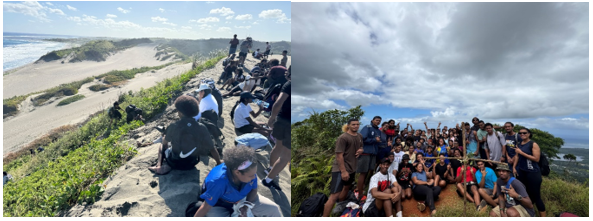
On September 9 and 10, 2025, 120 students from Dr Stephen Galvin’s GE201 Biogeography – Plants, Animals and the Human Environment unit went on field trips to Sigatoka Sand Dunes and Mt. Korobaba. Students studied the zonation of littoral/coastal vegetation and flora of the Sigatoka Sand Dunes National Park, gaining an understanding of the physical geography of the coastal dunes area, the native and introduced plant communities, the main dominant species, the natural succession, and the environmental problems that face the National Trust of Fiji, the managers of the national park. The following day, students characterized the community composition and forest structure on Mt. Korobaba, gaining firsthand experience of how altitudinal changes in abiotic variables combine to bring about changes in species composition.
Vanuatu PGD Programme
PGD Programme in Biology and Chemistry to be Offered in Vanuatu for the First Time
The Postgraduate Diploma (PGD) Programme in Biology and Chemistry will be offered in Vanuatu for the first time as a summer class. Until now, students from Vanuatu travelled to Laucala Campus to undertake this programme. This new local offering represents an important step towards improving access to postgraduate studies in the region.
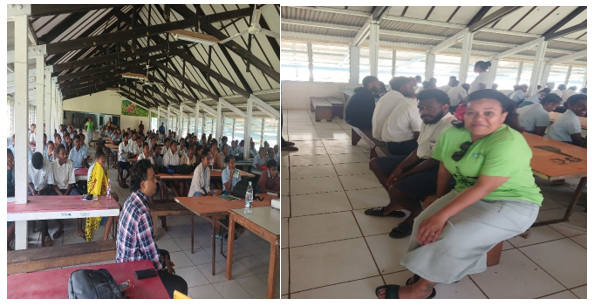
From 6th to 10th September 2025, a team consisting of the Deputy Acting Head of School, Dr. David Rohindra, Dr. Awei Bainivalu, and Ms. Taraivini Cama visited the Vanuatu Campus. The main purpose of the visit was to assess the feasibility of offering the PGD programme in Vanuatu, with a particular focus on its laboratory components.
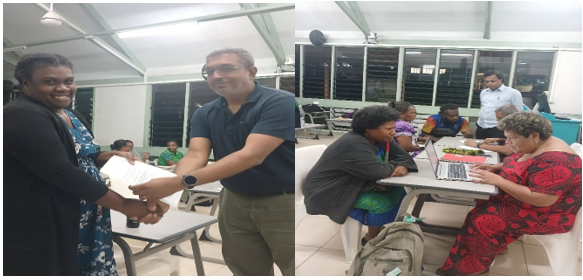
As part of their assessment, the team visited two key laboratory facilities — the Ecolab and the Vanuatu Bureau of Standards Lab — to explore the potential for these sites to support the practical requirements of the programme. Discussions were held with lab personnel to confirm whether these facilities could meet the academic needs of PGD students.
GeoLab
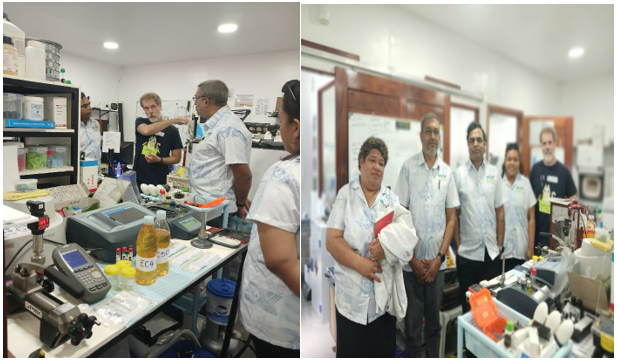
Vanuatu Bureau of Standards Lab
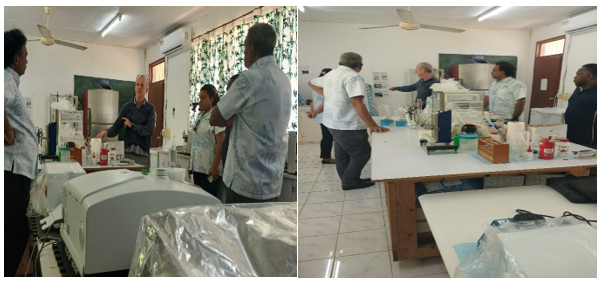
The team also met with students who had expressed interest in the PGD programme and issued them their Offer Letters during the visit.
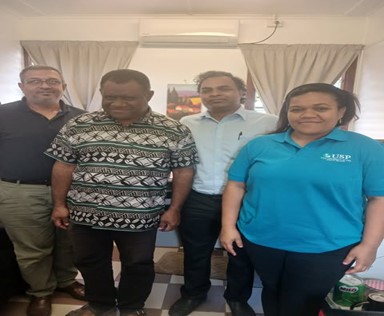
A key highlight of the visit was a meeting with the Director of Tertiary Education at the Vanuatu Ministry of Education. Discussions focused on the upcoming delivery of the PGD programme and how the Ministry could support its successful implementation. The meeting also explored potential areas for broader collaboration between the University and the Ministry to support national education and capacity-building priorities.
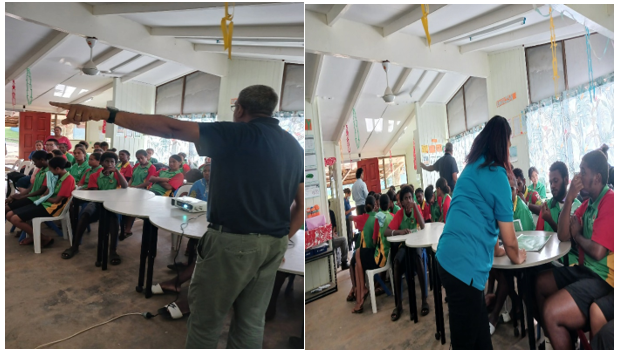
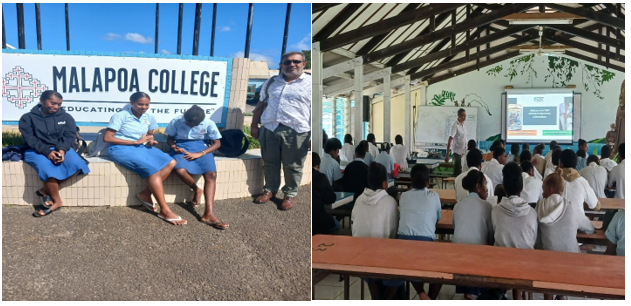
In addition, the team took the opportunity to visit several secondary schools to promote the broader range of programmes offered by both the School of Agriculture, Geography, Environment, Ocean and Natural Sciences (SAGEONS) and the School of Science, Technology, Engineering, and Mathematics (STEM).
Malapoa College
The official launch and commencement of the summer class of the PGD Programme in Vanuatu is scheduled for November 2025.
Society of Economic Geologists Conference (SEG) Conference (26 – 29 September 2025)
USP Students Attend Prestigious Economics Conference in Brisbane
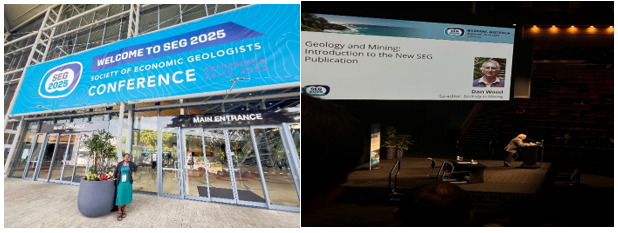
Ten of our economics students proudly represented the University at the Society of Economics Conference held in Brisbane, Australia, from 26th to 29th September 2025. The conference brought together leading academics, researchers, policymakers, and students to engage in high-level discussions on current global and regional economic issues.
The event featured keynote presentations, panel discussions, and research paper sessions covering areas such as development economics, sustainability, policy analysis, and applied econometrics. Our students had the opportunity to attend these sessions, broaden their academic horizons, and gain valuable insights into the latest economic research and trends.
Participation in the conference also provided students with excellent professional development opportunities — from networking with international experts and fellow students, to enhancing their understanding of economic challenges and innovations relevant to the Pacific region.
This experience not only enriched their academic journey but also strengthened their capacity to contribute meaningfully to the field of economics in the region.
Feedback from student:
SEG Conference 2025 – Experience Report
Name: Silveria Bobogare
Program: Environmental Science
Event: SEG 2025 Conference, Brisbane, Australia
As a student of environmental science, I found the SEG 2025 Conference in Brisbane to be an inspirational experience. The conference focused on sustainable mineral extraction, climatic consequences, and environmental management – themes directly tied to my study. I went to seminars on environmental remediation, green mining technology, and sustainable resource use policies. These discussions made it clearer to me how environmental scientists and geoscientists may collaborate to lessen the harm that mining causes to ecosystems. The field trip that emonstrated how geology relates to environmental protection in practical projects was one of the highlights. My network and expertise were also widened by meeting students and professionals from throughout the globe. My enthusiasm for preserving the environment and promoting responsible development was heightened by this encounter. It served as a reminder that for a brighter future, science and sustainability must coexist.
Monthly Update – October 2025
Chemical Society for the South Pacific (CSSP)
CSSP Celebrates 40 Years of Advancing Chemistry with Inspiring Student Awards Event
Suva, Fiji – October 4, 2025
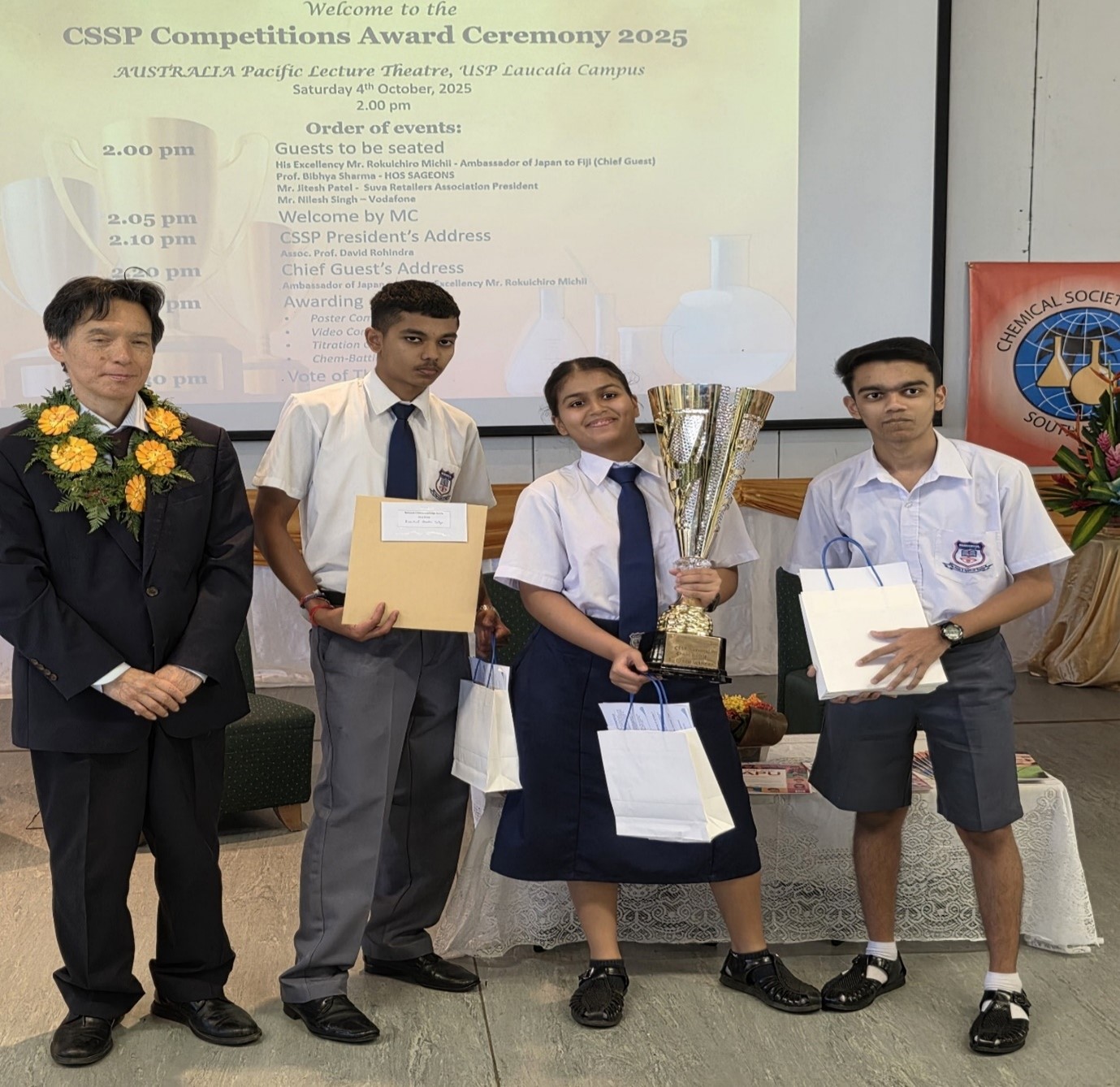
The Chemical Society of the South Pacific (CSSP) marked its 40th anniversary with a vibrant celebration of science and student achievement during its Annual Competition Awards held on Saturday, 4th October 2025. The event, hosted at the University of the South Pacific (USP), brought together young scientific minds, educators, and dignitaries in a grand recognition of chemistry excellence across the nation.
Established in 1985 at USP, the CSSP has remained steadfast in its mission to advance chemical science and its application in the Pacific. Over the past four decades, the non-profit organisation has promoted scientific knowledge through workshops, outreach programs, and its signature student competitions — all aimed at fostering scientific growth and serving the public with professionalism and integrity.
The preliminary rounds were conducted in July across multiple centres, the University of the South Pacific, Nadi Muslim College, DAV College Ba, and Labasa Sangam College, with over 70 secondary schools nationwide taking part. Two hundred and seventy enthusiastic students competed in the preliminaries, demonstrating the growing interest and passion for chemistry among young Fijians. Following these rounds, the grand finals were held on the 4th of October 2025 at The University of the South Pacific, bringing together 35 of the top-performing schools from across the country. The competition was fierce, with students showcasing their analytical skills, teamwork, and creativity in what proved to be a highly challenging and inspiring finale. This year’s events featured the Chem-Battle, Titration Competition and Poster and Video Projects. Notably, this year’s competitions saw over 60% female participation, reflecting the Society’s commitment to empowering women in science and supporting gender equality in STEM — a priority that aligns with global “Women in Science” initiatives.
The Chief Guest for the occasion was His Excellency, Honourable Mr. Rokuichiro Michii, Ambassador Extraordinary and Plenipotentiary of Japan to Fiji. In his address, Ambassador Michii praised the CSSP’s commitment to education and scientific development in the region, emphasizing the role of international collaboration in advancing Pacific science.
Welcoming the guests was CSSP President, Associate Professor David Rohindra, who reflected on the society’s journey over the past 40 years and the enduring impact of its programs on Pacific science education.
Also present were distinguished guests Mr. Nilesh Kumar, Vodafone Fiji Head of Recharge and Distribution; Professor Bibhya Sharma, Acting Head of SAGEONS; and Dr. Desta Gedefaw, Discipline Coordinator for Chemical and Biological Sciences at USP.
2025 CSSP Competition Winners
National Chem-Battle Competition
Titration Competition (Senior – Year 12)
Titration Competition (Advanced – Year 13)
Poster Competition
Video Competition
The CSSP’s Annual Competitions have become a hallmark of secondary school science in Fiji, nurturing a generation of young chemists, researchers, and innovators. This year’s 40th anniversary added special meaning to the celebration, showcasing the society’s enduring legacy and its continued drive to shape the future of science in the South Pacific.
As the curtains closed on this year’s event, the message was clear — the passion for chemistry is alive and thriving among Fiji’s youth, thanks to the unwavering efforts of CSSP and its partners. Here’s to 40 years of excellence — and to many more ahead.
CSSP GRADUATING TEA 2025 (24 October 2025)
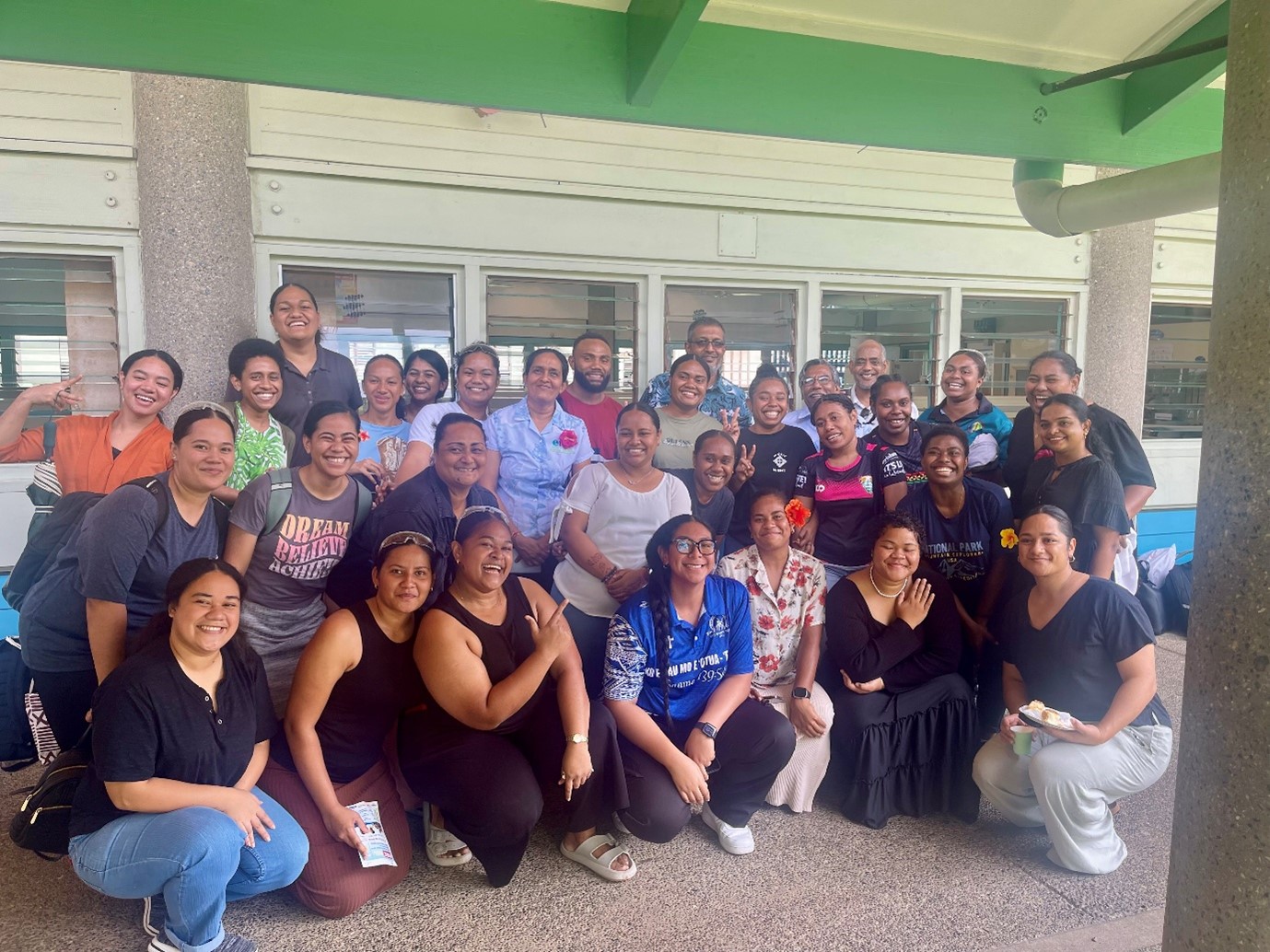
As per CSSP annual tradition, the society organised a morning tea for Chemistry graduating students who are in their final semester. This annual event is a chance for us, as a society of professional chemists, to wish our final-year students well as they begin their professional journey as chemists. It is also a chance for students to chat with teaching staff to explore future opportunities for research, getting advice, networking, and to help build their confidence as they exit university life and join the professional world.
Integration of Indigenous and Scientific Knowledge for Climate Adaptation — Allan Rarai (PhD Candidate, University of the South Pacific) at Adaptation Futures 2025
Allan Rarai, PhD candidate at the School of Agriculture, Geography, Environment, Ocean, and Natural Sciences (SAGEONS) at the University of the South Pacific (USP), participated in the 8th International Adaptation Futures Conference in Christchurch, New Zealand (11–17 October 2025). Adaptation Futures is a leading international forum for climate-change adaptation that brings together researchers, policymakers, practitioners, Indigenous knowledge-holders, and community advocates to share research, develop collaborations, and advance adaptation strategies.
Prior to the conference opening on Monday, 13 October, Mr. Rarai attended an Early Career Network event co-organized with the University of Canterbury. The event included presentations, panel sessions, and small-group discussions designed to support emerging researchers and facilitate networking. A Vice-Chair of IPCC Working Group II delivered a keynote addressing pathways for early-career researchers — particularly PhD candidates with publications — to engage with the IPCC, providing constructive guidance on contributing to assessment processes.
Mr. Rarai presented a paper entitled “Indigenous Knowledge and Science as an Early Warning System for Ciguatera Fish Poisoning Outbreaks in Vanuatu” (published December 2024). The research integrates community observations and scientific analyses to detect environmental signals associated with elevated ciguatera risk in Vanuatu. This work contributes to broader discussions on combining Indigenous and scientific knowledge for adaptation, aligning with themes in the IPCC Sixth and Seventh Assessment processes that emphasize plural knowledge systems in adaptation planning.
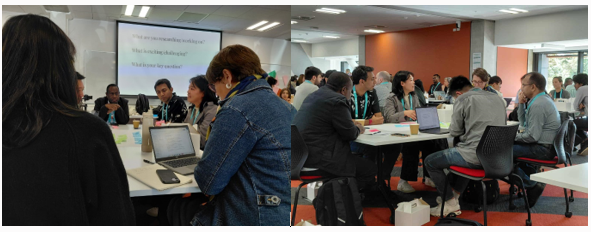
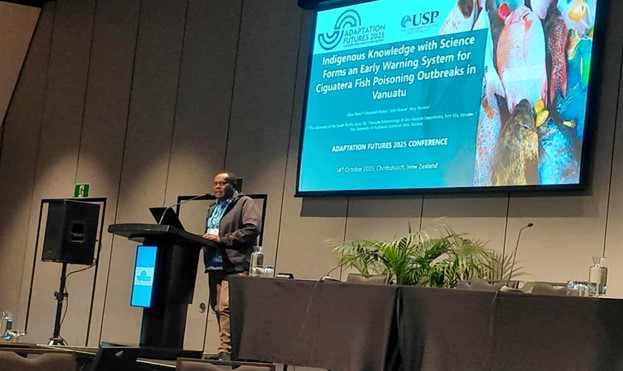
Workshop: Navigating Pacific Ways of Responding to Climate Change, on 17 October 2025, Mr. Rarai participated in a one-day workshop organized by the University of Auckland titled “Navigating Pacific Ways of Responding to Climate Change.” The workshop explored Indigenous and traditional Pacific epistemologies and their application to climate adaptation futures. It focused on the diversity and resilience of Pacific communities, the socio-cultural and environmental challenges they face, and innovative adaptive responses being developed across the region.
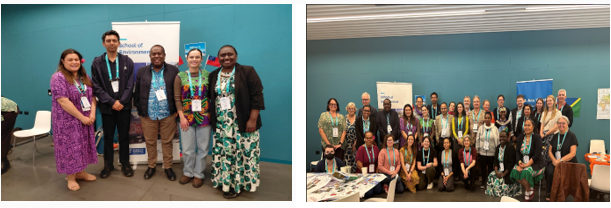
Mr. Rarai served as a facilitator and panelist in the workshop. He led a group discussion on a Vanuatu case study and contributed to panel dialogues that highlighted how Indigenous Traditional Knowledge (ITK) can complement scientific approaches to inform adaptation policy and practice. His published work on integrating ITK and science was cited during the event as an example of effective collaboration between local knowledge-holders and researchers.
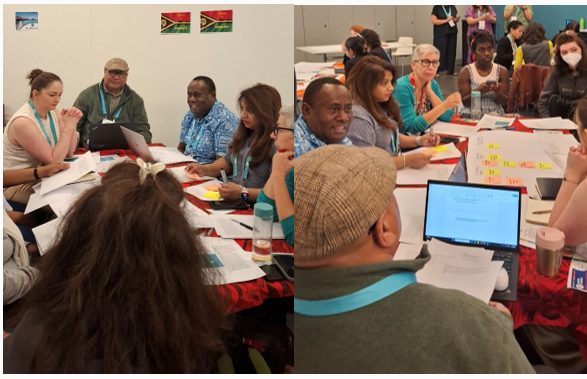
The workshop comprised 52 participants and combined panel discussions, hands-on activities, group work, and storytelling to deepen interdisciplinary understanding of Pacific perspectives on climate change. Attendees included academics, adaptation practitioners, policymakers, Indigenous leaders, artists, and traditional knowledge-holders. Activities were designed to promote meaningful dialogue, foster cross-disciplinary collaboration, and support the co-development of transformative solutions for Pacific climate resilience.
Mr. Rarai’s participation and presentation reinforced the University of the South Pacific’s standing as a leading research institution addressing climate adaptation in the Pacific. His work exemplifies integrative approaches that bring together local and scientific knowledge to improve early-warning systems and inform policy-relevant adaptation strategies, consistent with discussions in IPCC assessment processes on the importance of knowledge integration.