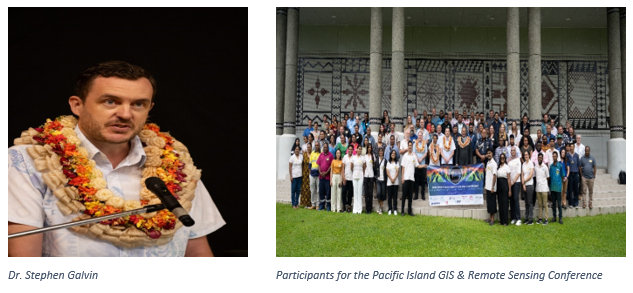
Launching of USP Emalus Campus PGDip S2S Cohort Programme in Biology and Chemistry
November 11, 2025, saw the launch of the new PGDip S2S Cohort Programme for Biology and Chemistry at the Alafua Campus in Port Vila. The PGDip S2S Cohort Programme was launched by the Vanuatu Minister of Education, Mr. Simil Johnson, and was also attended by USP’s Representative, DVCE Prof. Jito Vanualailai, and SAGEONS Actg. HOS, Prof. Bibhya Sharma. The launch was also attended by the representative from the Vanuatu Bureau of Standards and Geolab, together with most of the postgraduate students and staff of the Vanuatu Emalus Campus. The programme kicks off on November 17, 2025, until January 2027.

Sustainable Science – cassava research
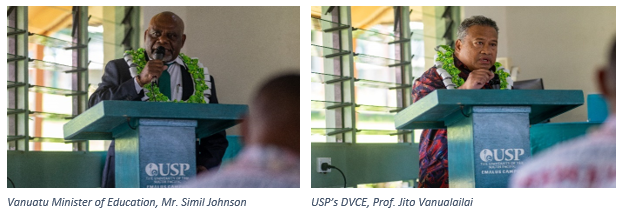
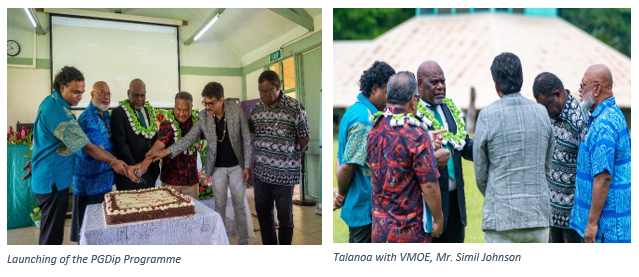
Associate Prof. David Rohindra and his research team developed a cassava-based coating infused with agar, glycerol, and clove essential oil. It is the world’s first cassava-based edible coating to replace plastic food wraps.
Pacific Islands GIS & Remote Sensing Conference
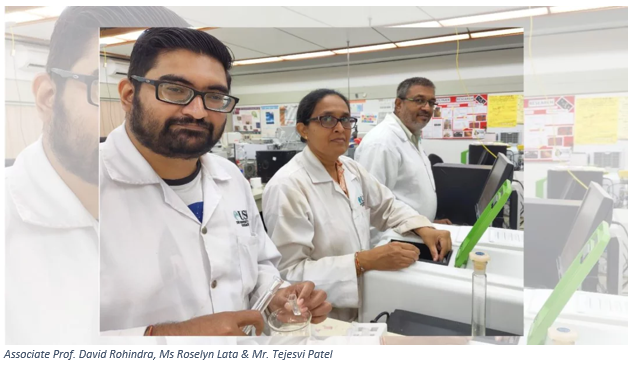
The University of the South Pacific (USP) proudly hosted the Pacific Islands GIS & Remote Sensing (PGRSC) User Conference from 24–27 November at the Japan-Pacific ICT Centre, welcoming more than 300 delegates from across the region and abroad.
Organized by the Pacific GIS and Remote Sensing Council (PGRSC), the conference was made possible through the Memorandum of Understanding (MoU) between USP and PGRSC, which supports collaboration in geospatial research, training, and regional capacity-building. USP’s engagement in the Council continues to be strengthened through the active participation of Ms. Arti Pratap, who represents the University on the PGRSC Board.
Delivering remarks on behalf of USP, Discipline Coordinator Dr. Stephen Galvin highlighted the University’s commitment to advancing geospatial capability in the region. He emphasized that strong geospatial networks are fundamental to sustainable development, climate resilience, and informed governance across the Pacific. Dr. Galvin noted that the Pacific’s environmental vulnerabilities and geographic isolation make collaboration, data sharing, and capacity-building essential. He encouraged delegates to use the conference as an opportunity to strengthen partnerships, deepen regional connectivity, and work collectively toward a more resilient and well-informed Pacific.
This year’s conference, held under the theme “Building and Enhancing Geospatial Networks in the Pacific,” brought together government representatives, researchers, private-sector partners, NGOs, and international experts for four days of knowledge exchange and technical presentations.
A major highlight was the attendance of Prof. Lena Halounová, President of the International Society for Photogrammetry and Remote Sensing (ISPRS), whose presence underscored global recognition of the Pacific’s growing contribution to the geospatial field.
With more than 70 presentations focusing on climate resilience, coastal monitoring, disaster preparedness, water resource assessment, and sustainable development, the conference demonstrated the crucial role of GIS and Remote Sensing in addressing the region’s most pressing challenges.
USP’s partnership with PGRSC and its role as host reinforce the University’s ongoing commitment to advancing geospatial science, supporting regional collaboration, and strengthening Pacific communities through research, innovation, and technology.