The Global Community Food for Planetary Health (GCFaH) led by The University of the South Pacific’s Center for Sustainable Futures and The Foundation for Rural Integrated Enterprises and Development (FRIEND) in Fiji, is charting a new path for the Pacific region by prioritising community well-being and resilience.
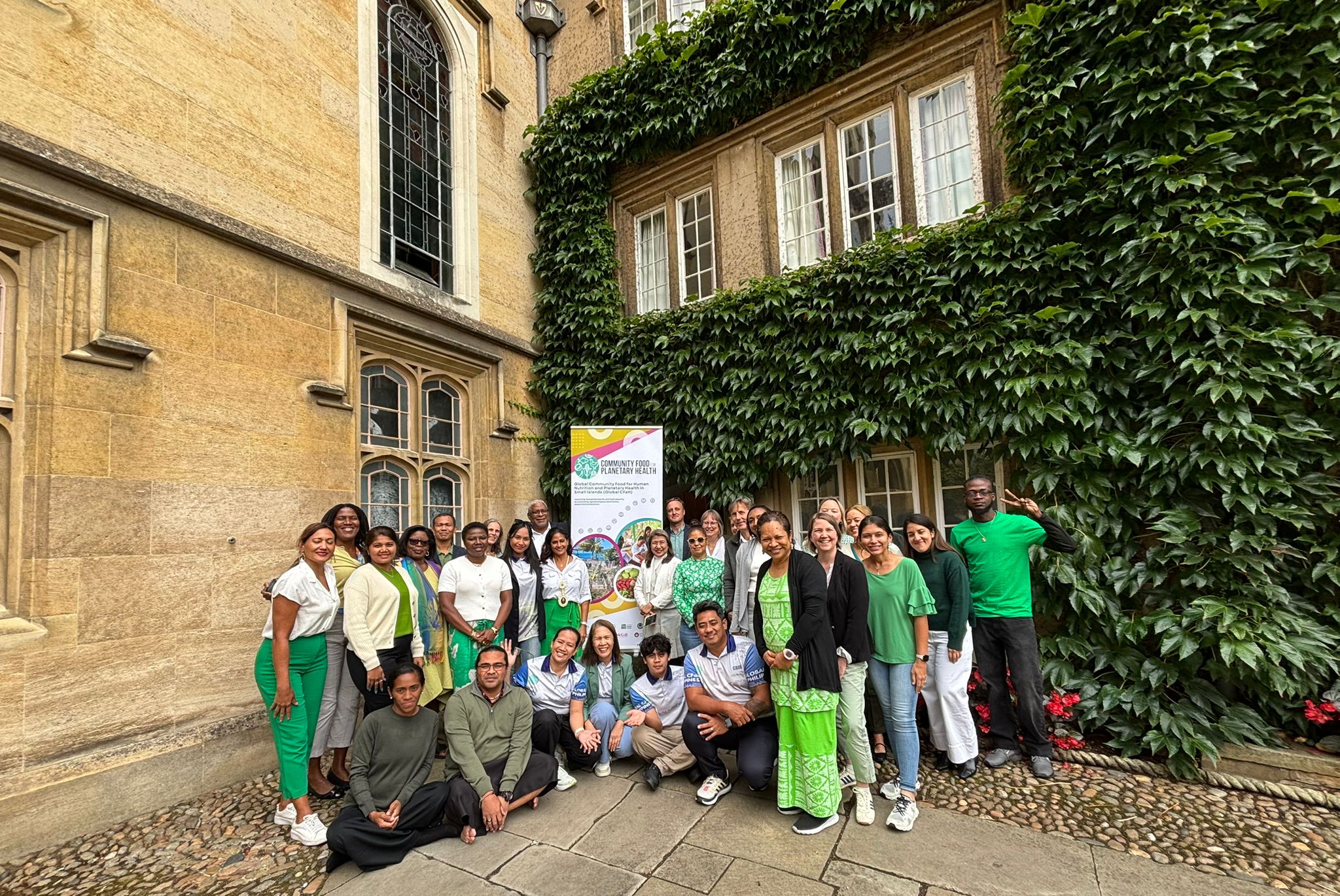
This follows the recent GCFaH Investigators Workshop held earlier this month in Sidney Sussex College at the University of Cambridge.
The three-day workshop brought together global experts to review baseline data and discuss critical themes such as discussions on food security, dietary diversity and quality, food sourcing and agroecological food production.
USP’s GCFaH project Co-Investigator Dr. Hilda Waqa-Sakiti who was also part of the panel discussion focused on the considerations of sustainability and plans beyond Global CFaH. She outlined plans to explore avenues in sourcing small grant funding from within the Pacific to continue the GCFaH research work and addressing research gaps.
Dr Waqa-Sakiti also clarified how the capacity development component of the GCFaH has developed Pacific experts in the field to continue this research and expand it as well into the region.
She added that the potential research gaps for a possible “GCFaH 2” are emerging through this well-established partnership.
Fiji, like many Pacific Island nations, faces unique challenges related to health and nutrition. One of the most pressing issues is the rise in non-communicable diseases (NCDs), such as obesity and diabetes, which are major contributors to the country’s health burden.
Research Fellow Mr. Filipe Veisa highlighted the value of these workshops, noting that they provide an opportunity to review preliminary baseline data, learn from interventions at other study sites and consider the long-term sustainability of the initiative.
The GCFaH project is currently being implemented in Fiji, the Philippines, St Vincent and St Lucia.
It is jointly led by the University of Exeter and the University of the West Indies, with key contributions from USP, FRIEND Fiji, Western Philippines University, University of Cambridge, McGill University and The James Hutton Institute.
Funded by the UK’s National Institute for Health Research and supported by partners, the project stands as a beacon of hope in addressing the NCD crisis.
Through community engagement, innovative research and advocacy for policy reform, the Global CFaH project is working to build a healthier, more sustainable future for Fiji and beyond.