The University of the South Pacific (USP) has successfully revived its Learning & Teaching Forum after a six-year hiatus. The once-annual event, which brings together academics, scholars, and students, was held earlier this week at the Japan-Pacific ICT Centre.
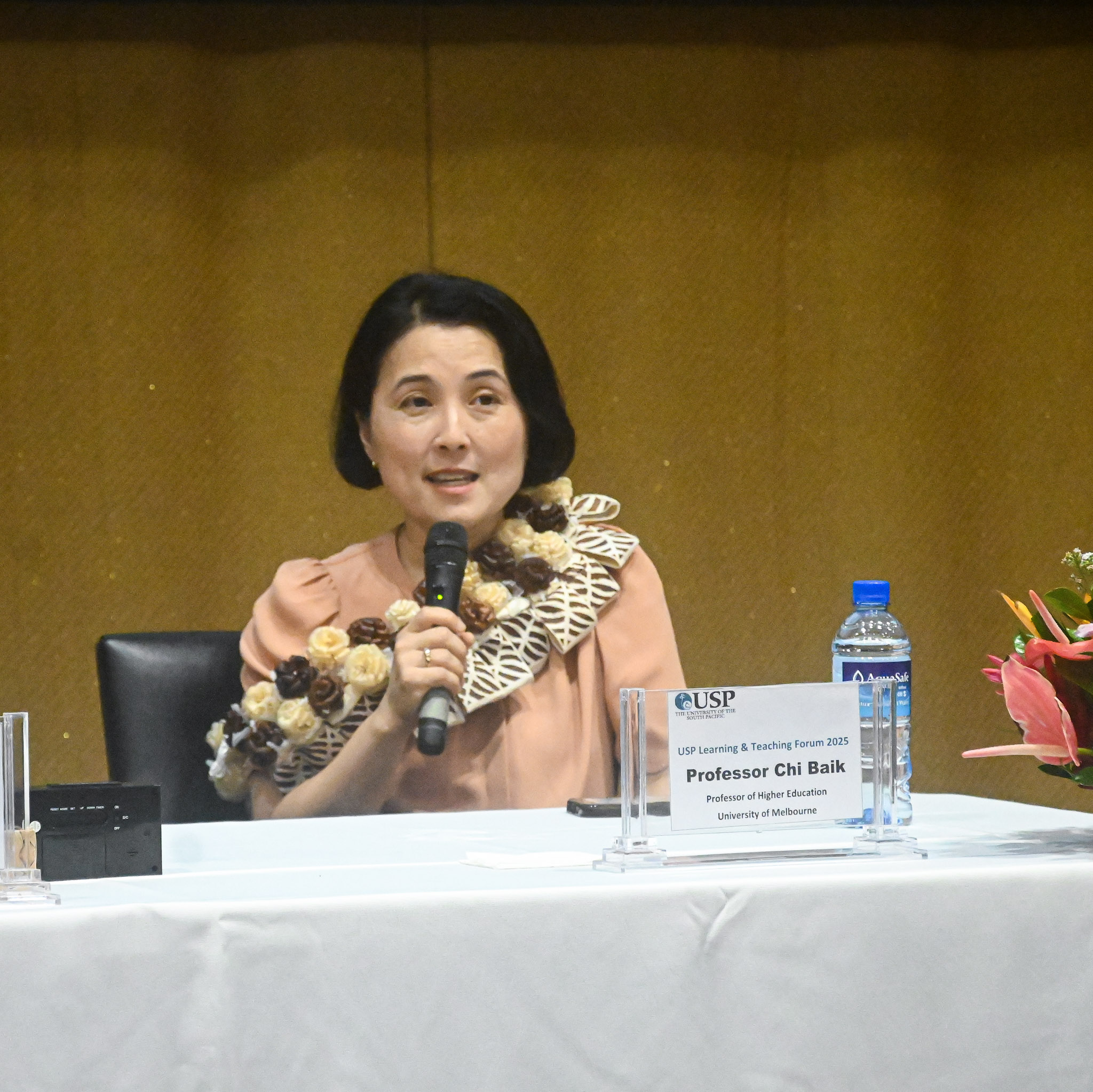
The L&T Forum was elevated by the attendance of keynote speaker Professor Chi Baik from the University of Melbourne’s Centre for the Study of Higher Education.
The Forum’s theme was: “Engaging students, assuring learning: Practical strategies for meaningful assessment in the age of AI (Artificial Intelligence).”
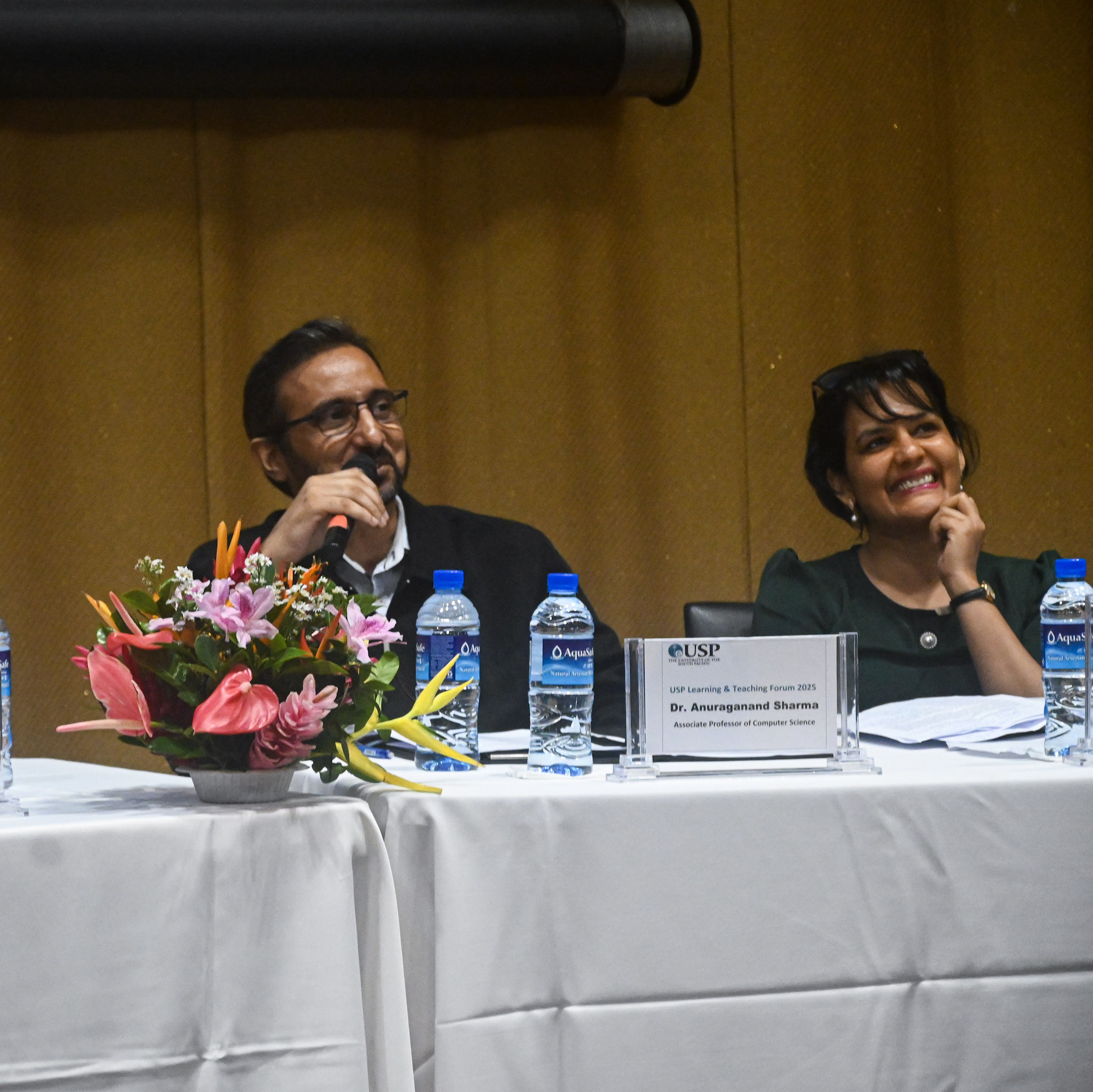
It also featured an esteemed panel discussions from USP’s Associate Professor of Computer Science, Dr Anuraganand Sharma; USP Human Geographer, Dr Naohiro Nakamura; USP’s Centre for Flexible Learning Director and Director of PACFOLD, Dr Rajni Chand; USP Assistant Lecturer in Ethics and Governance, Razeen Ali; USPSA President and Chair of the USP Student Council, Manasa Navara; and Bachelor of Arts student in Politics and International Relations, International Business, and Marketing, Nicole Matavesi.
In his opening address, USP Deputy Vice-Chancellor and Vice-President (Education) Professor Jito Vanualailai, emphasised the need for universities to strategically adapt their education methods in a continuously evolving world, particularly concerning AI.
“This discussion invites us to think critically about what meaningful assessment looks like in our Pacific context and how we can uphold academic integrity while also embracing innovation,” Professor Vanualailai said.
“We must design learning that prepares our students not just for the present, but for the future as well.”
 “Around the world, universities are rethinking how assessment shapes student learning, moving towards more authentic, debate-focused, and future-oriented approaches. For USP, this conversation comes at an important moment for all our course coordinators and colleagues.”
“There are currently no technological tools available to perfectly monitor the use of AI. Therefore, our policies are geared towards encouraging the ethical use of AI.”
Professor Baik, whose research globally informs higher education practice by focusing on student engagement, well-being, and assessment design, shared her insight on theme.
She highlighted the critical importance of assessment design for an institution.
“There is a vast body of research that shows assessment shapes students’ approaches to learning,” she said.
“How we assess signals to students what is truly important. For some students, assessment is the real curriculum, and very importantly, assessment signals the kind of intellectual work that we value.”
She added the importance of preparing students for an unpredictable future.
“To me, the fundamental concept in assessment is validity,” Professor Baik added.
“If our assessments lack validity, they don’t really do what we want them to do. The questions we need to ask are: Are we thinking about preparing graduates for uncertain futures?”
“There must be a focus on looking at capabilities, which go beyond knowledge, competencies, and skills. Capabilities are the integration of all those as well as dispositions.”
“So how do we know that students’ work is truly a reflection of their learning, or is it a reflection of AI-enabled performance?”
The panel provided context-specific insights on addressing the challenges of AI in education.
Dr Chand provided a global perspective on the issue and noted the limitations that current AI have.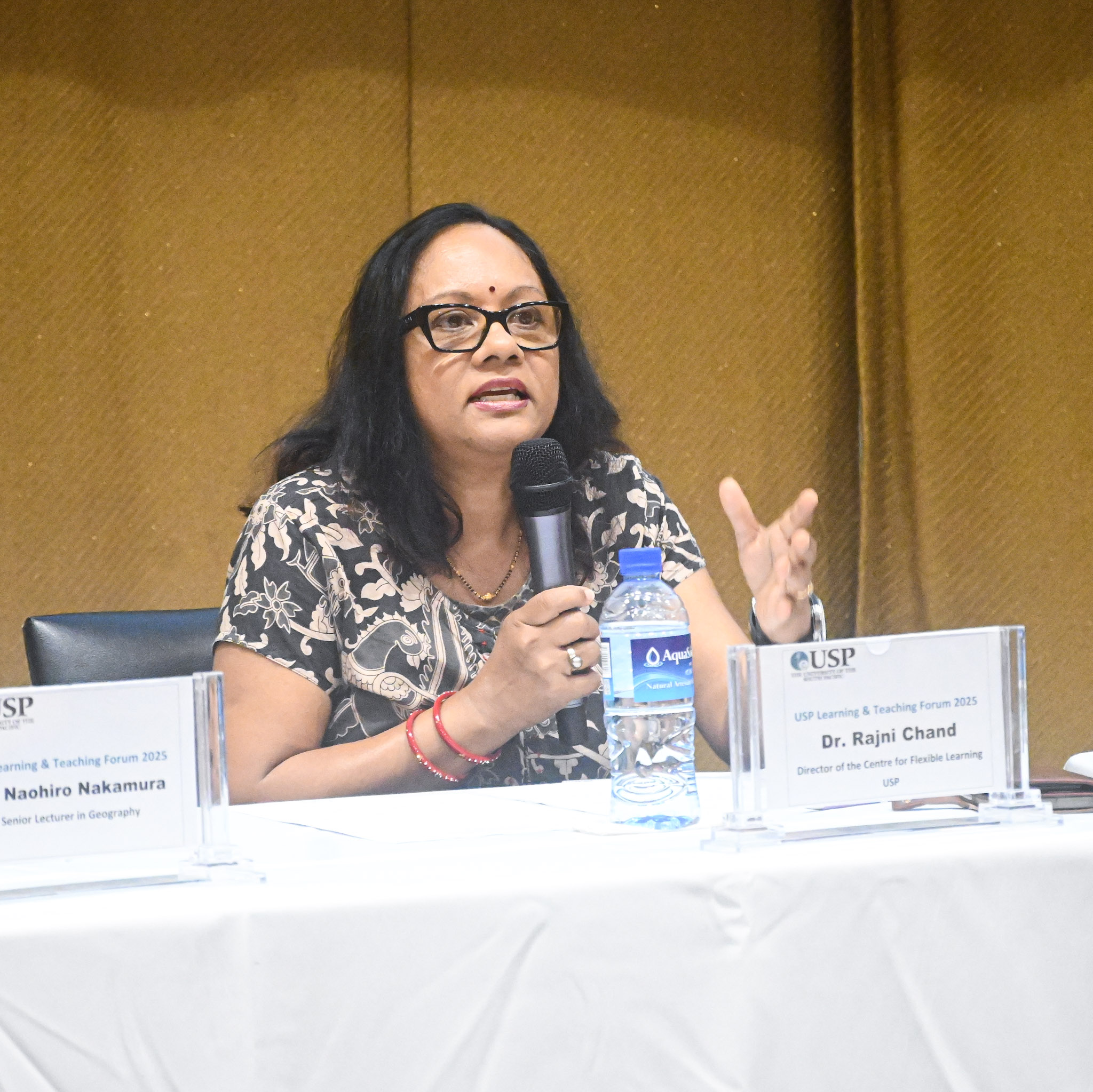
“AI has put all universities on the same level, making us realise that we are not the only ones facing this challenge,” Dr Chand said.
“We must look at how we are supporting our staff in terms of guiding them on ethical AI use, how to detect AI-generated work, and how to design assessments that require students to use their critical thinking.”
“We also need to look at the challenges students face, for instance, are they using the tools without understanding what constitutes ethical use, or are they depending on AI to produce their work without enhancing it?”
“We still have areas and things that AI cannot generate. We cannot prevent students from using AI, so as Professor Baik has suggested, we must design our assessment to take them a step beyond what the large language models can produce, especially in our Pacific context.”
From the student standpoint, Navara stressed that students need clear policies when it comes to the use of AI.
“Contextualising this to AI, there is currently no formal policy whatsoever, and therefore, teachers and students do not have any defined control over it,” Navara said.
“The invention of an AI policy can introduce some form of control, allowing us to be very careful in how we contextualise assessments and ethical abilities. It should encourage us to be creative and innovative in our own work, rather than relying on AI to complete the assessment for us.”
This marks the beginning of USP’s concerted effort to develop clear policies that guide the ethical integration of AI while upholding the highest standards of academic integrity.