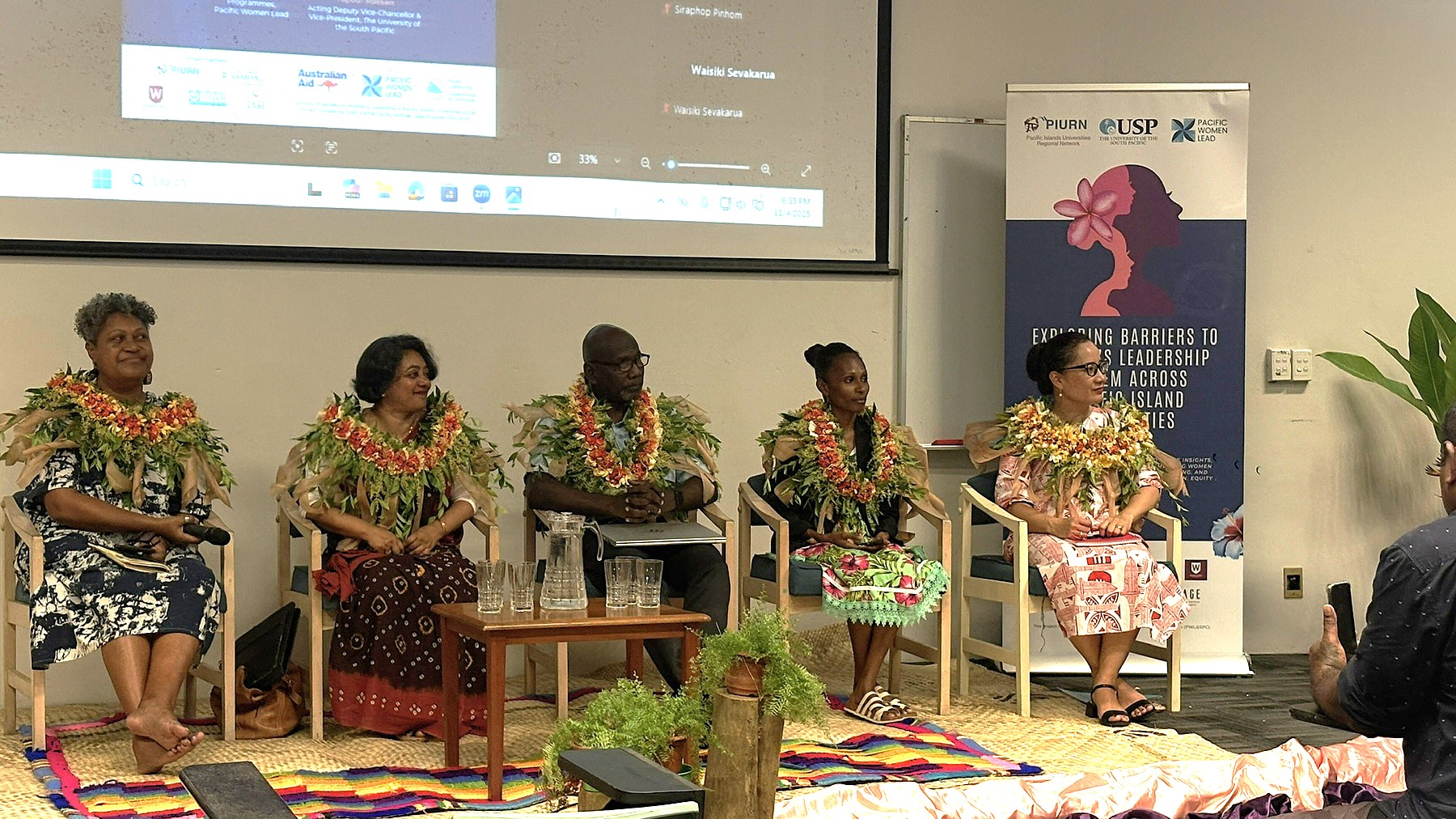
The University of the South Pacific’s (USP) Ni-Vanuatu Master’s student, Ceceilie Louis is challenging the next generation of women to help redefine leadership in public spaces.
Louis who was part of the panel discussion hosted by the Centre for Sustainable Futures earlier this week, aims to set a new path for women leadership in the Pacific.
The event which was held under the banner “Leadership and Gender Equity for Sustainable Futures” included a diverse portfolio of speakers like Louis, Fiji Minister for Women, Children & Social Protection, Sashi Kiran, USP Acting Deputy Vice-Chancellor & Vice President, Dr Manumanutavai Tupou- Roosen, Solomon Islands National University Pro-Vice Chancellor Academic Eric Katovai, and Pacific Women Lead Manager Programmes, Sala Tupou.
Louis believes that leadership is still heavily guarded by gender bias and wants to challenge the status quo.
“Leadership today is not about who speaks the loudest; it’s about who serves with purpose, who listens, and who uplifts others,” she said.
“But the journey toward gender equality in leadership is far from complete. We need to continue empowering girls to believe that leadership is not limited by gender, that they have every right to stand, to speak, and to shape the future for their countries.”
“We need a system that encourage women to lead in political parties. Let us celebrate the women who are already leading in Parliament, in our communities and our schools, let us prepare the next generation of young women to rise with courage.”
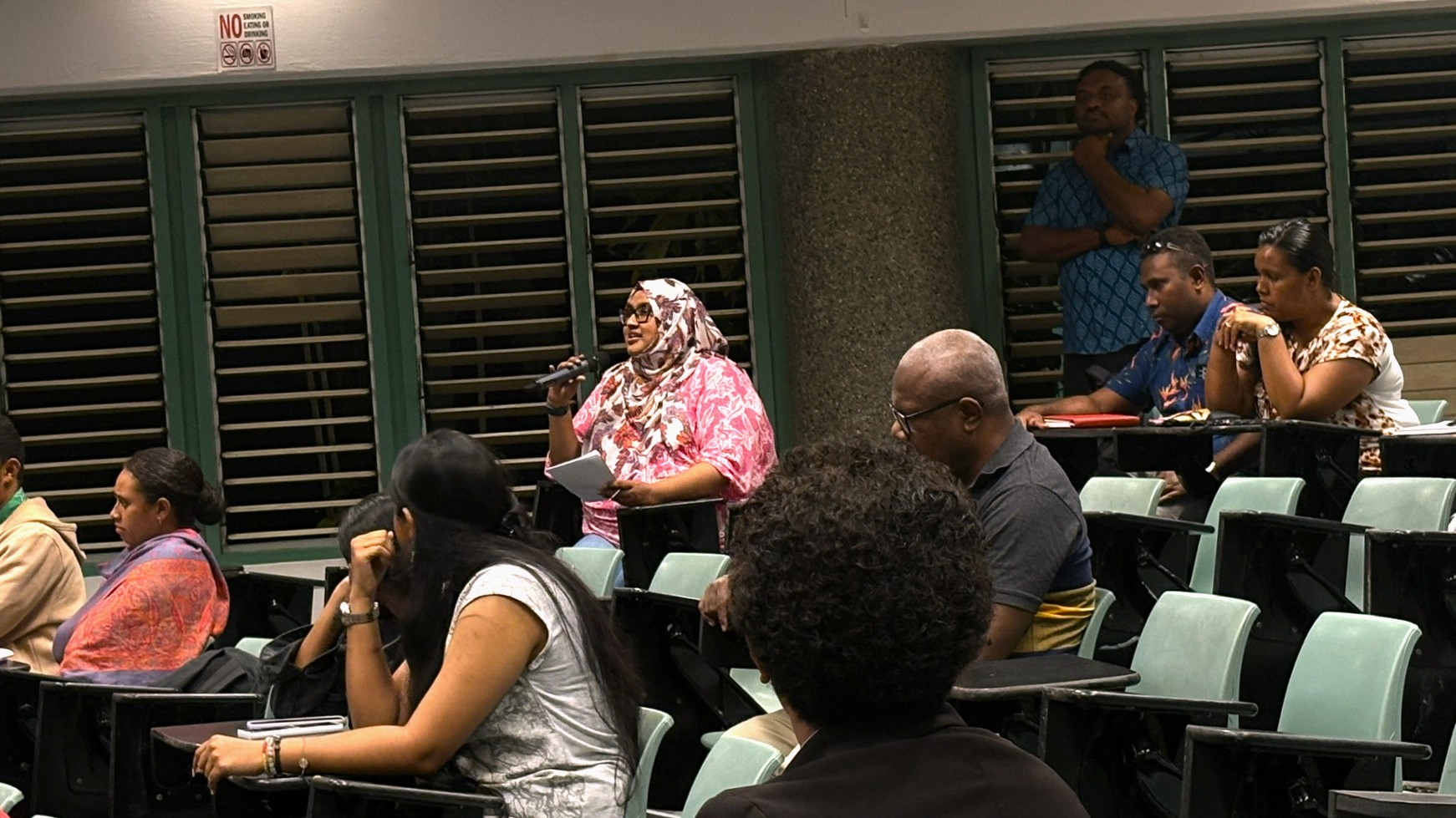
Minister Kiran also highlighted the underlying gender gap that still exist in leadership positions, emphasising the need for stronger initiatives.
“In Fiji, women significantly are underrepresented on boards across public and private
sectors. Recent survey shows that only about 20% of board members of state owned
enterprises are women and it’s very similar in the private sector,” Kiran added.
“Highlighting the persistent gender gap in leadership positions and the need for stronger policies and initiatives to promote women’s participation at the highest level of decision making.”
“Leadership through new domains and partnerships these approaches reflect evolving vision, one that sees women’s leadership as integral to every sector and system that drives our national and regional development.”
Dr Tupou-Roosen framed gender equality as essential to the region’s stability, drawing on Pacific heritage.
“When we think specifically about global equality and leadership, it’s not just a matter of fairness, it is an absolute cornerstone for building a sustainable future for our Pacific people,” Dr Tupou-Roosen added.
For Katovai, fostering gender-equitable leadership should begin with intentional policy and institutional culture.
“Universities must move beyond simply encouraging gender equality to embedding it within the governance system; that is, through recruitment, promotion, and representation policies that are measurable, monitored, and enforced,” he shared.
“We need to make sure women are well-represented in decision-making communities, whether at the university council, in the academic senate, in various city management committees, faculties, schools, or other decision-making spaces.”
“That simply means addressing barriers such as a workplace culture that sometimes undervalues women’s contributions.”
“When both women and men lead together, the institution becomes more balanced, empathetic, relevant and responsive to its communities. It defines the kind of institution we want to be and the kind of future we want to shape.”
The discussion reaffirmed that investing in women’s leadership is not just a matter of fairness, but a vital foundation for building a more sustainable Pacific future.