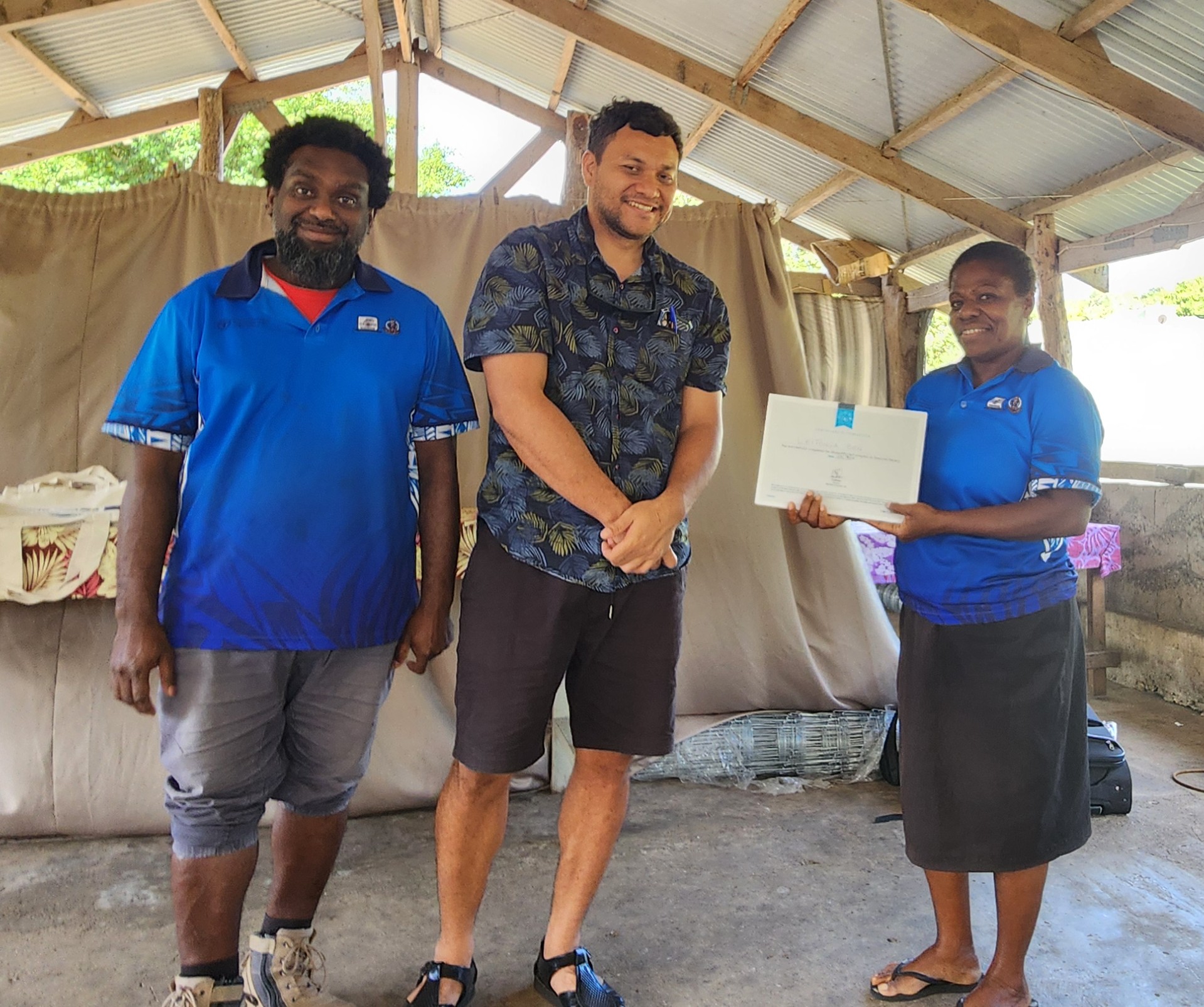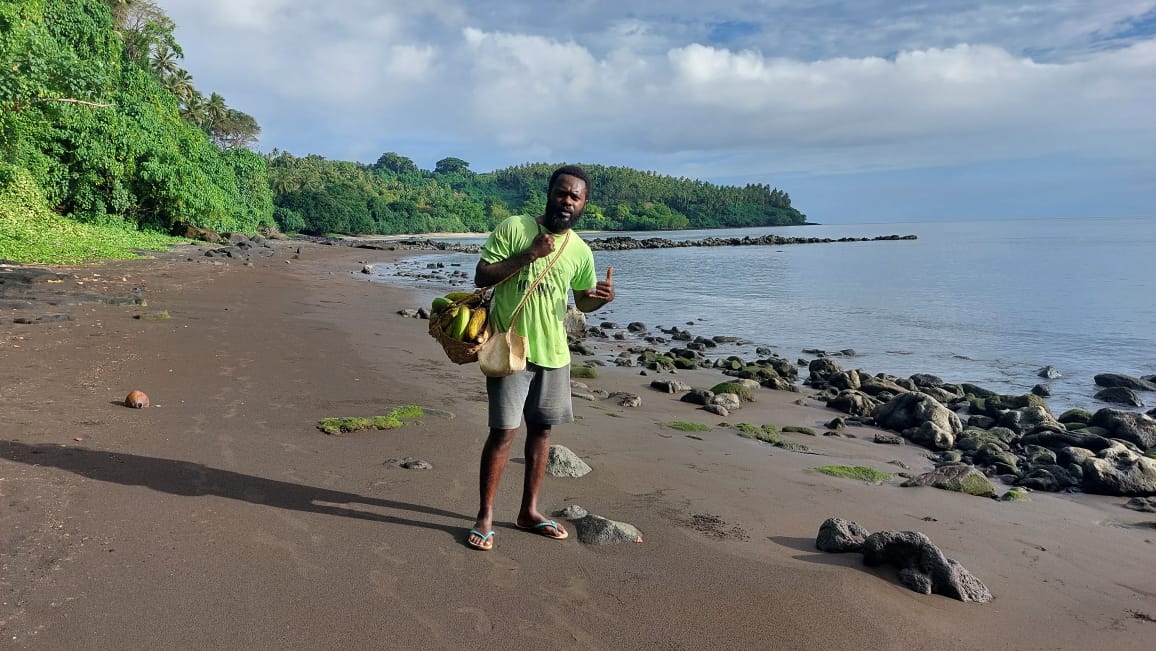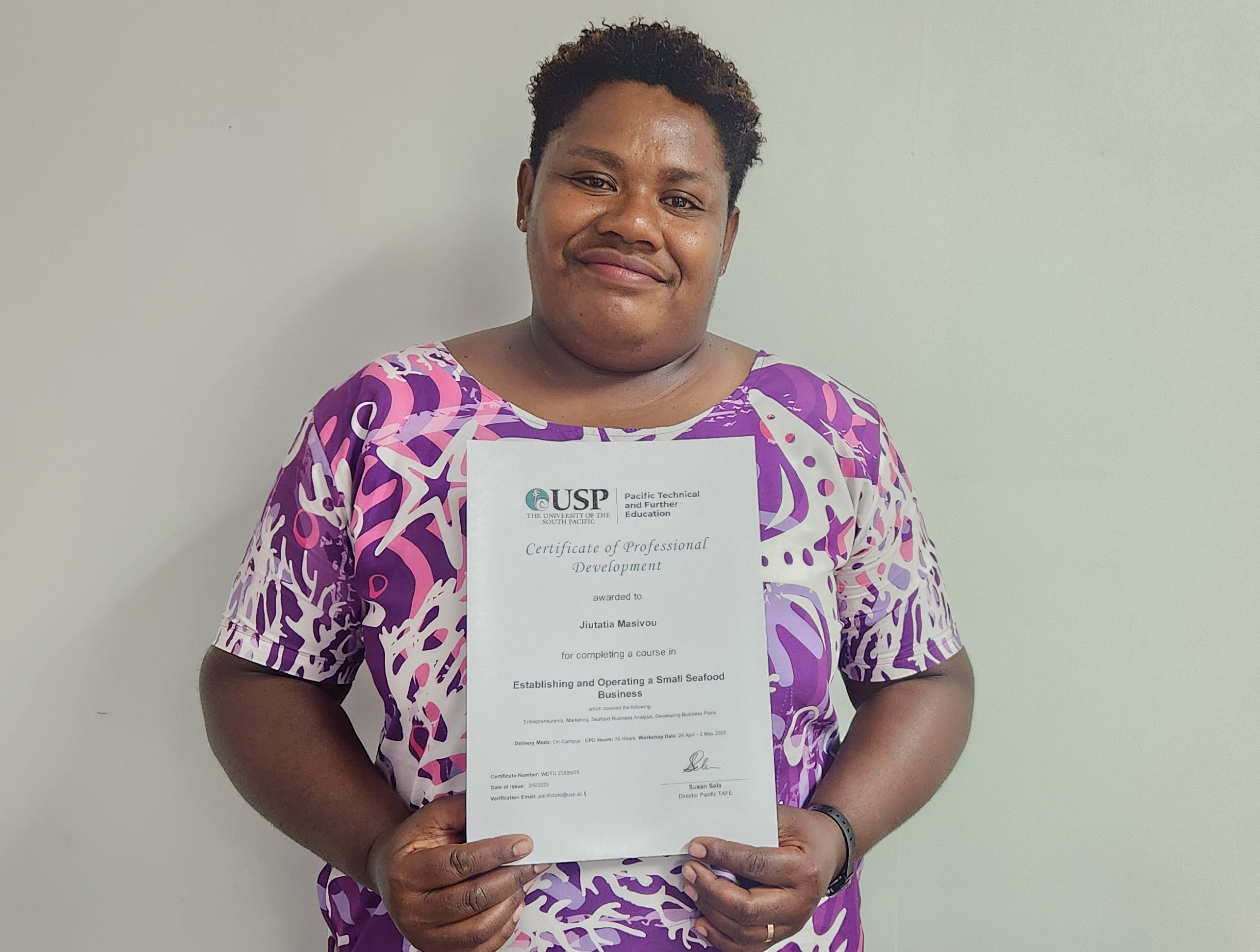
Lautoka, Fiji (6 October, 2025): From the clear waters of Namuaimada in Rakiraki, Ra, Jiutatia Masivou starts her day early, harvesting nama, green sea grapes that have long sustained her family and community. But from April 28th to May 2nd, 2025, Jiutatia stepped away from the shore, joining a five-day Micro-qualification Training on Establishing and Operating a Small Seafood Business.
This training, implemented by the USP component of the PEUMP Programme and funded by the European Union and the Government of Sweden, brought together participants from across the region to build knowledge, strengthen skills, and develop sustainable business practices for small-scale seafood entrepreneurs. For Jiutatia, it was more than a training—it was an eye-opening experience that would reshape how she viewed her role as a harvester, businesswoman, and community leader.
Jiutatia is not just a seagrape supplier; she also serves as the treasurer for the Tikina Navolau Women’s Cooperative, a group formed in 2022 comprising women from four villages—Namuaimada, Navolau 1, Navolau 2, and Nakorokula. While the other villages focus on handicrafts, the women of Namuaimada have specialized in harvesting and selling nama. Yet, as of now, only 20 women from Namuaimada are actively running the cooperative.
During the training, Jiutatia gained critical insights into the importance of maintaining product quality. She learned that high-quality nama isn’t just about appearance; it’s about earning and maintaining the trust of customers. “Good quality product means good business,” she reflected. This understanding reaffirmed her commitment to excellence, knowing that her reputation and her village’s livelihood depended on it.
But perhaps more impactful was her newfound appreciation for social responsibility. Daily harvesting of nama is a reality in Namuaimada, but Jiutatia learned that sustainability begins with how the product is harvested. “We must pluck the sea grapes gently, without removing the roots,” she explained. This technique ensures that the marine plants continue to grow, preserving the ecosystem for future generations.
Inspired by the training, Jiutatia is now looking to implement a harvesting rotation plan with the cooperative. The idea is simple but powerful: divide the seagrape harvesting across different locations and time periods, allowing each area the chance to rest and regenerate. This strategy will help prevent overharvesting and ensure a consistent, long-term supply of nama for both local consumption and commercial sale.
As Jiutatia looks to the future, she sees a path not just for growth in business, but for resilience in her community. With the lessons from the training etched into her plans, she hopes to lead the cooperative toward a sustainable model where economic development, environmental stewardship, and cultural pride go hand in hand.
For Jiutatia Masivou, the sea has always provided. Now, thanks to this micro-qualification training, she is better equipped than ever to protect it in return.
USP is one of four key implementing partners of the PEUMP Programme, a EUR 45 million programme that promotes sustainable management and sound ocean governance for food security and economic growth while addressing climate change resilience and conservation of marine biodiversity.
It follows a comprehensive approach, integrating issues related to ocean fisheries, coastal fisheries, community development, marine conservation, and capacity building under one single regional action. The PEUMP programme is housed within the Centre for Sustainable Futures.
-ENDS-
Media Contact
Lore Croker, USP PEUMP Communications, lore.croker@usp.ac.fj