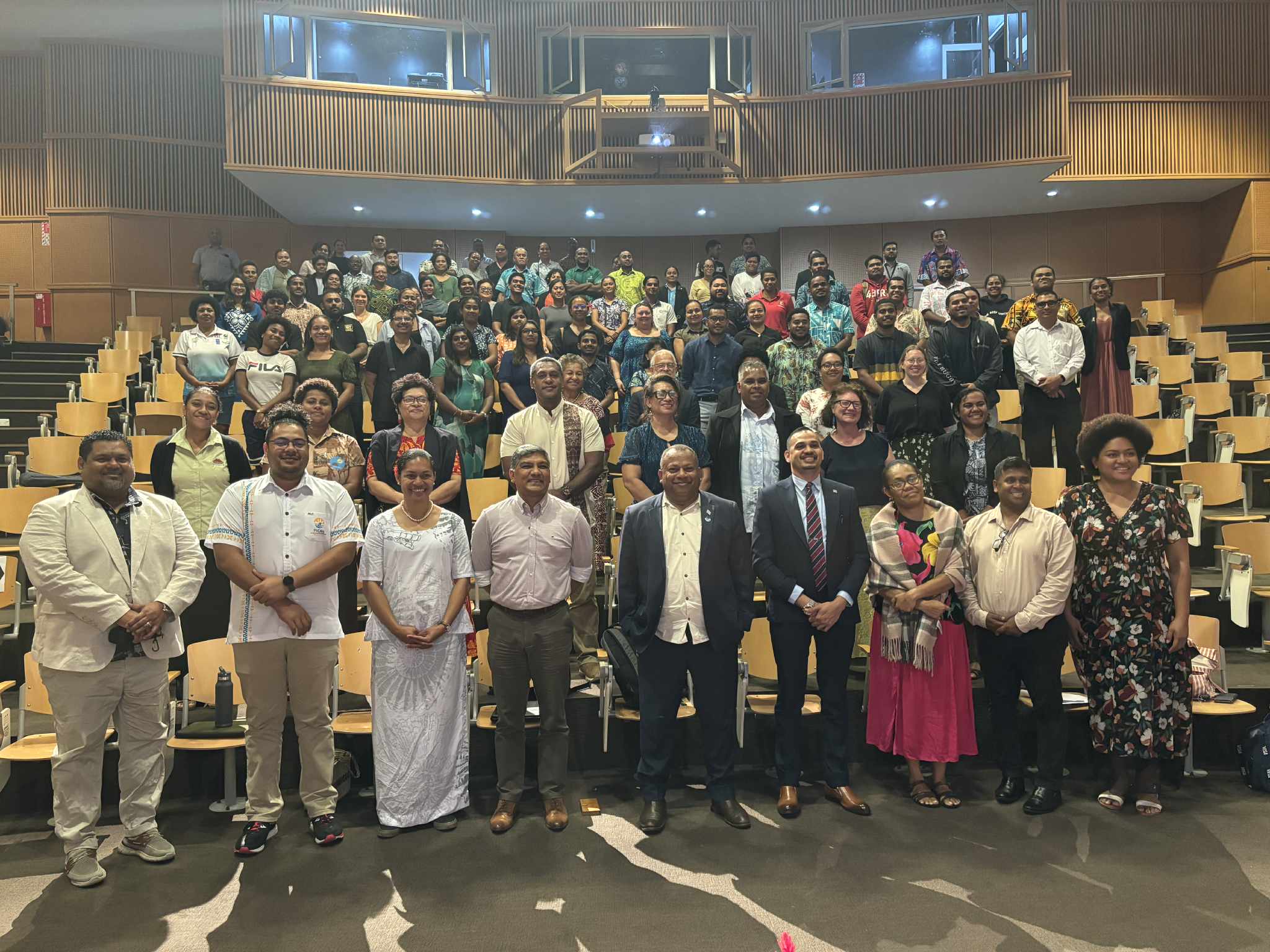
The University of the South Pacific (USP) recently hosted the Fiji National Climate Action Dialogue, a pivotal event bringing together diverse stakeholders to strengthen national ownership of climate action.
Held at the Japan-Pacific ICT Centre, the dialogue fostered key insights and shared experiences from representatives across government, NGOs, academia, and the private sector.
The event, themed “National Climate Action Dialogue: Inclusive Engagement for a Resilient Fiji” and co-hosted by USP’s Centre for Sustainable Futures (CSF), was opened by Fiji’s Minister for Environment and Climate Change, Honourable Mosese Bulitavu.
In his address, he emphasised the government’s pursuit of enhanced coordination and transparency in the fight against climate change.
“Tonight is not just another gathering, it is all of us collectively choosing the future we want for our nation,” Bulitavu said.
“We are here because climate change is not a distant threat for us; it is at our doorsteps and we all know the stories of the storms that have pulled our communities apart.”
“The dialogue today brings together not only government stakeholders but also private sector, civil society, academia, youth, and community representatives into one space so we can have honest and genuine conversations about mitigation, adaptation, resilience, and the finance that makes is required to make all of this work.”
Permanent Secretary Dr Sivendra Michael stressed the need for domestic leadership.
“I think these conversations does not have to happen in silence we need to have it in rooms across sector,” Dr Sivendra added.
“We do not have to look further, we can do make these changes and be the leaders in our own spaces and own sectors domestically before we look out. Let’s be the leaders that we try to, you know, go and fight for and be across these spaces.”
 Echoing this call for local ownership, Leader of Opposition & Former Climate Champion Honourable Inia Seruiratu said: “It affects us all. We also need to take responsibility and take ownership, particularly when it comes to solutions and working together so that we can achieve sustainable development.”
“There must be a framework, that’s why we are here. All the stakeholders, let’s take ownership, let’s do something about it.”
The panellists also focused on empowering key demographics and incorporating traditional values.
USP Academic Salanieta Kitolelei emphasised reconnecting with traditional values of environmental stewardship.
“We are people who are closely related to the environment. We live in the environment; we look after the environment. That’s what we need to re-instil, the values of protecting the environment in the people,” she added.
“And that’s the basic steps that we need to learn in order to take small steps toward climate action because we have a lot of people, we have a lot of champions sitting here today. I have these team panellists who are sitting here.”
“A lot of them, they go and they fight for us at the international level. But when you look in the communities, there are also a lot of people who are at different, in different communities, who are also champions in their own right.”
Pacific Islands Climate Actions Network Regional Director Rufina Varea advocated for empowering young people as innovators into climate change spaces.
“A critical opportunity also lies in empowering youth as innovators, instead of viewing young people solely as vulnerable demographics to be protected,” Varea stated.
“We must recognise and invest in them as a dynamic force for change and innovation, and we can take a look at the Pacific Ocean literary Youth Project, which transforms plastic waste into activism.”
Executive Director at Fiji Council of Social Services Vani Catanasiga highlighted the crucial need for an inclusive and localised approach to climate action.
“We need to focus on enhancing engagements that are inclusive and truly localised,” Catanasiga said.
“This means prioritising and institutionalising meaningful, not tokenistic engagements with civil society organisations and local communities in all stages of climate policy development.”
“We really need to be looking at climate finance mechanisms that are accessible and directly benefit local community or community-led initiatives.”
Representing the business community, Fiji Business Disaster Resilience Chair Sandeep Chauhan highlighted the private sector’s agility and resources.
“The private sector brings agility, innovation, and capital,” he said.
“We are ready and willing to be a full partner. We cannot do it alone.”
“Government policies and regulations need to enhance and support businesses already on the path of sustainable business practices. Let’s use this dialogue to bridge the gap between our bold policies and the daily reality of our business development.”