The University of the South Pacific (USP) is reinforcing its commitment to sustainable practices and contributing to the global shift towards more renewable energy sources.
This was a key message highlighted by facilitators at the recent USP Sustainable Seawater Utilisation workshop held at the Lautoka Campus in Fiji.
Co-funded by the Korean Ministry of Oceans and Fisheries through the Korean Research Institute of Ships and Ocean Engineering (KRISO), the three-day event aimed to educate and empower the next generation of innovative seawater technologies.
This is a crucial component of the ‘Seawater Air Conditioning of a USP Building’ pilot project.

Lautoka City Council Chairman and Acting CEO, Taitusi Rasoki, opened the workshop and underscored the transformative power of education in finding alternative ways of renewable sources of energy.
“Education allows us to meet the challenges and the demands of life in this changing world. The purpose of this workshop is to educate students and participants on sustainable seawater utilisation and also build capacity for new and upcoming technological advancements,” he said.
“The expertise and lecturers at this workshop vary, and it will truly be a fruitful discussion. I urge participants to learn more about these particular projects as much as possible and work on similar initiatives of their own.”
The second of its kind in Fiji, the workshop is the first phase of the project on seawater air conditioning, which has received funding of US$3.8 million from the Korean Government.
School of Information Technology, Engineering, Mathematics and Physics’ (STEMP) Professor of Mechanical Engineering and Deputy Head of School for Research, Innovation, and Graduate Affairs, Professor M Rafiuddin Ahmed, highlighted the growing interest from other Pacific Island Countries.
“Globally, all universities are trying to be energy independent, so these workshops are the first major step, towards that. Recently, we’ve had interest from other Pacific Island Countries like the Solomon Islands, who want an in-depth workshop like this, focusing not on aquaculture but on power generation and air-conditioning,” Professor Ahmed reiterated.
“The onus is also on large companies with corporate social responsibility to provide support to communities, not only to universities but schools in locations where there are potential for renewable energy.”

Embassy of the Republic of Korea, First Secretary/Maritime and Fisheries Attache, Ahn Joonyoung reaffirmed Korea’s commitment to a continued partnership for the sustainable development of the Pacific.
“Fiji is a great ocean nation with a mighty territory; your role in protecting the ocean through innovation and leading sustainable development is more important than ever. I hope that you will take part in this workshop with a strong sense of pride as members of the Pacific Community,” Joonyound stated.
“Through this programme, I hope we can share ideas to address the global challenges we all face, such as climate change, food security and clean energy.”

USP Lautoka Campus Director Dr Pramila Devi also expressed gratitude for the initiative.
“USP is grateful to the donors and organisers for bringing such a capacity-building workshop to Lautoka for the benefit of our stakeholders and the community. I am certain they will learn and enjoy the three-day workshop on sustainable seawater utilisation and also the hydroponics kits. Surrounded by the ocean, I am sure we will learn ways of utilising seawater,” she highlighted.
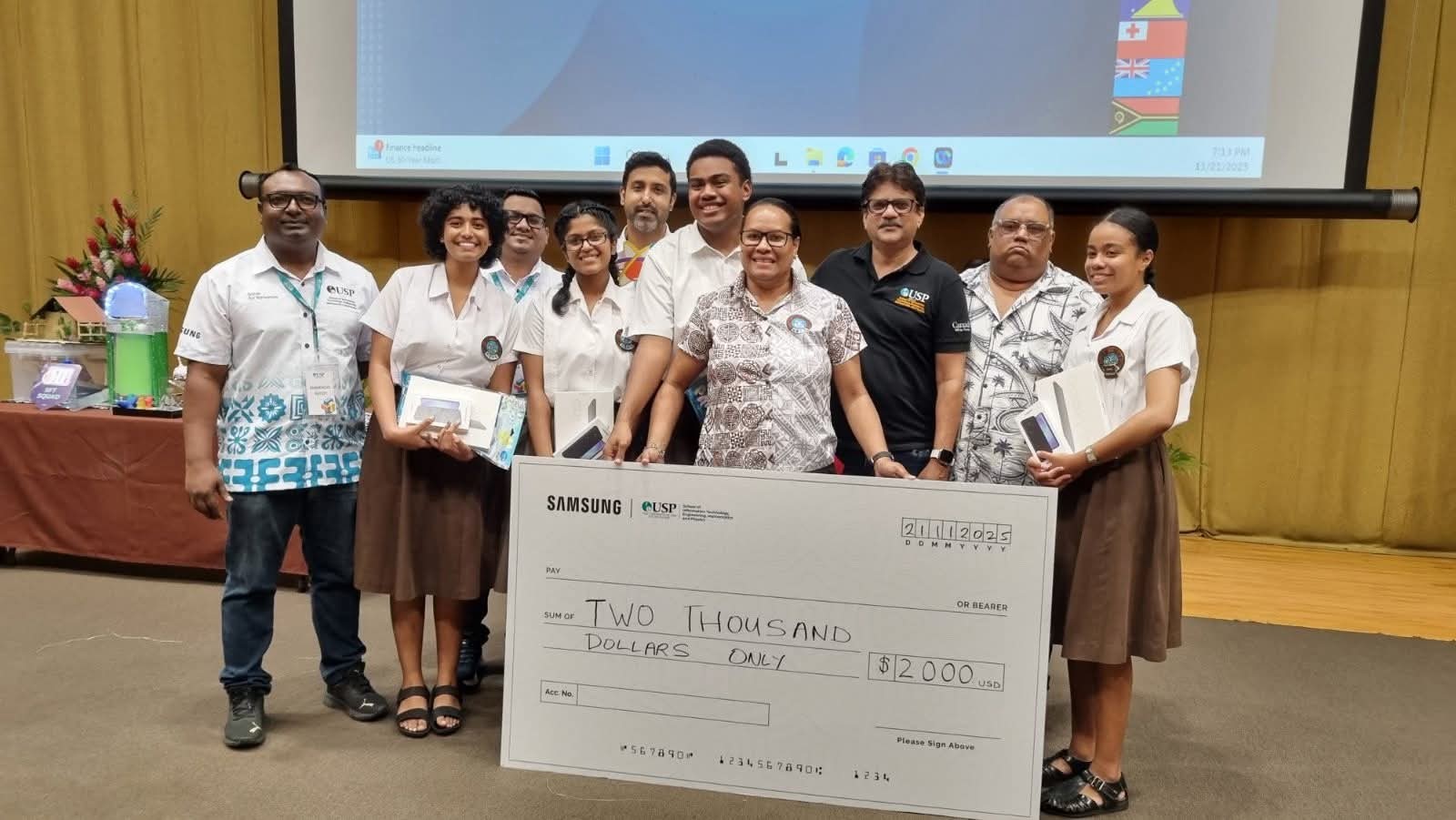
The workshop brought together a diverse group from the Western Division, including university students, hotel representatives and community members as part of the University’s integrated approach.
Science students from about 10 high schools in the Western Division were also part of the workshop.
Over the three days, participants explored topics that included ocean thermal energy, seawater air-conditioning, and hydroponics.