Navitilevu Bay shows the way
By SHREYA KUMAR
“The way humans need a house, fish need mangroves too.” – Setaita Biu, fish warden, Barotu Village, Fiji.
In the coastal village of Barotu in Navitilevu Bay, 50-year-old Setaita Biu reflects on the deep relationship between her community and the sea. As a fish warden, she knows the rhythms of the sea better than most. She also knows what’s been lost – and what’s starting to return.
“Just like we need a house to live in, fish need mangroves,” she says.
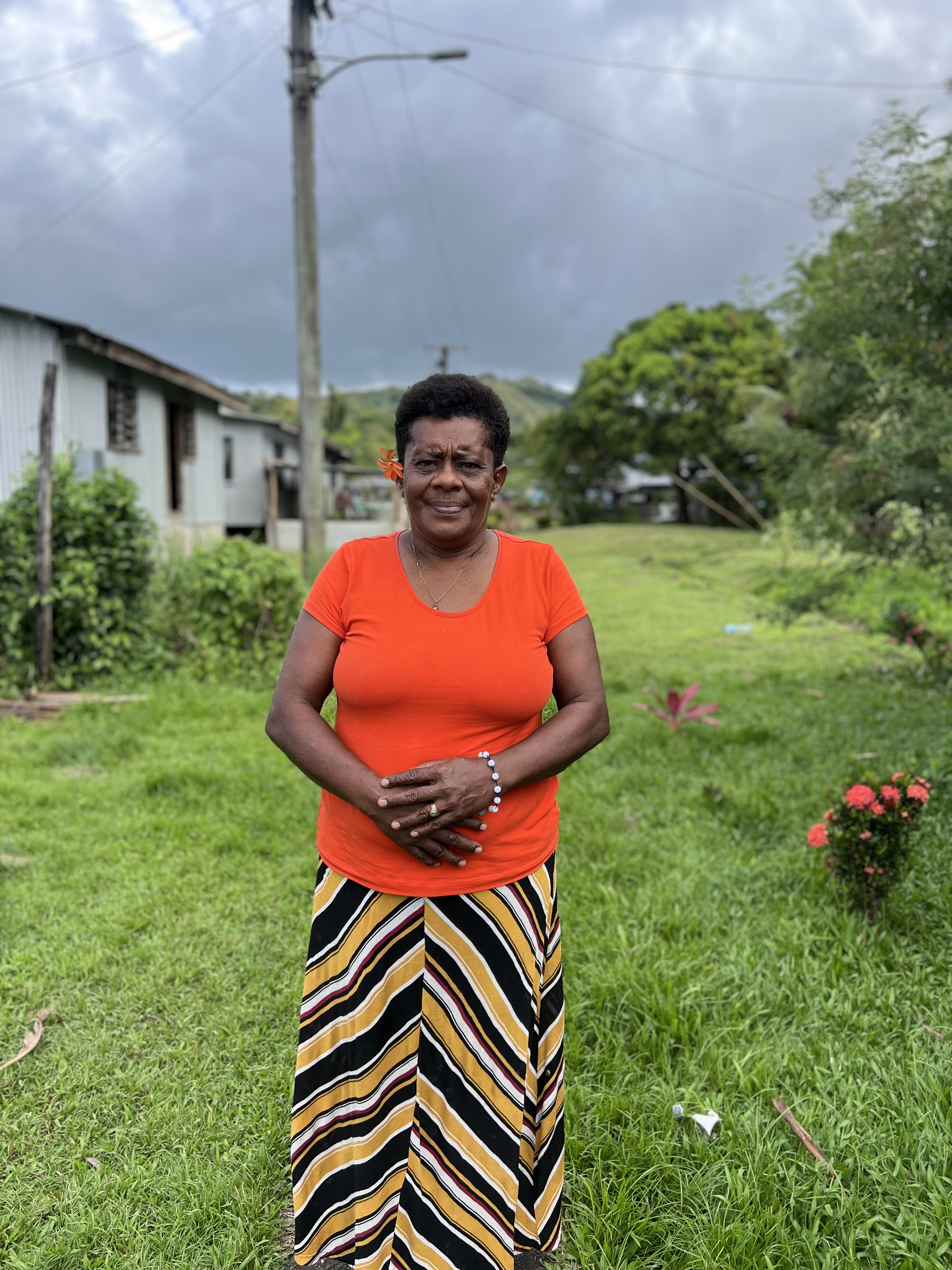
Setaita remembers how things were after Severe Tropical Cyclone Winston hit Fiji in 2016. The mangroves were damaged. Crabs, once plentiful in the muddy roots, became harder to find.
“We used to catch a lot of crabs. But after Winston, they disappeared. The mangroves were broken, and without them, the crabs didn’t have anywhere to live,” she says.
But now, things are slowly changing.
Restoring what sustains us
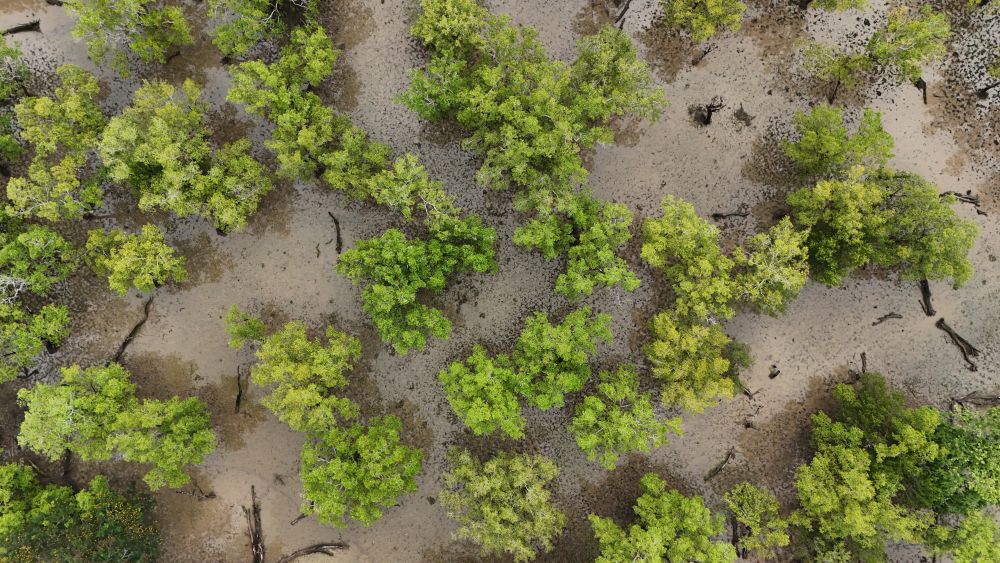
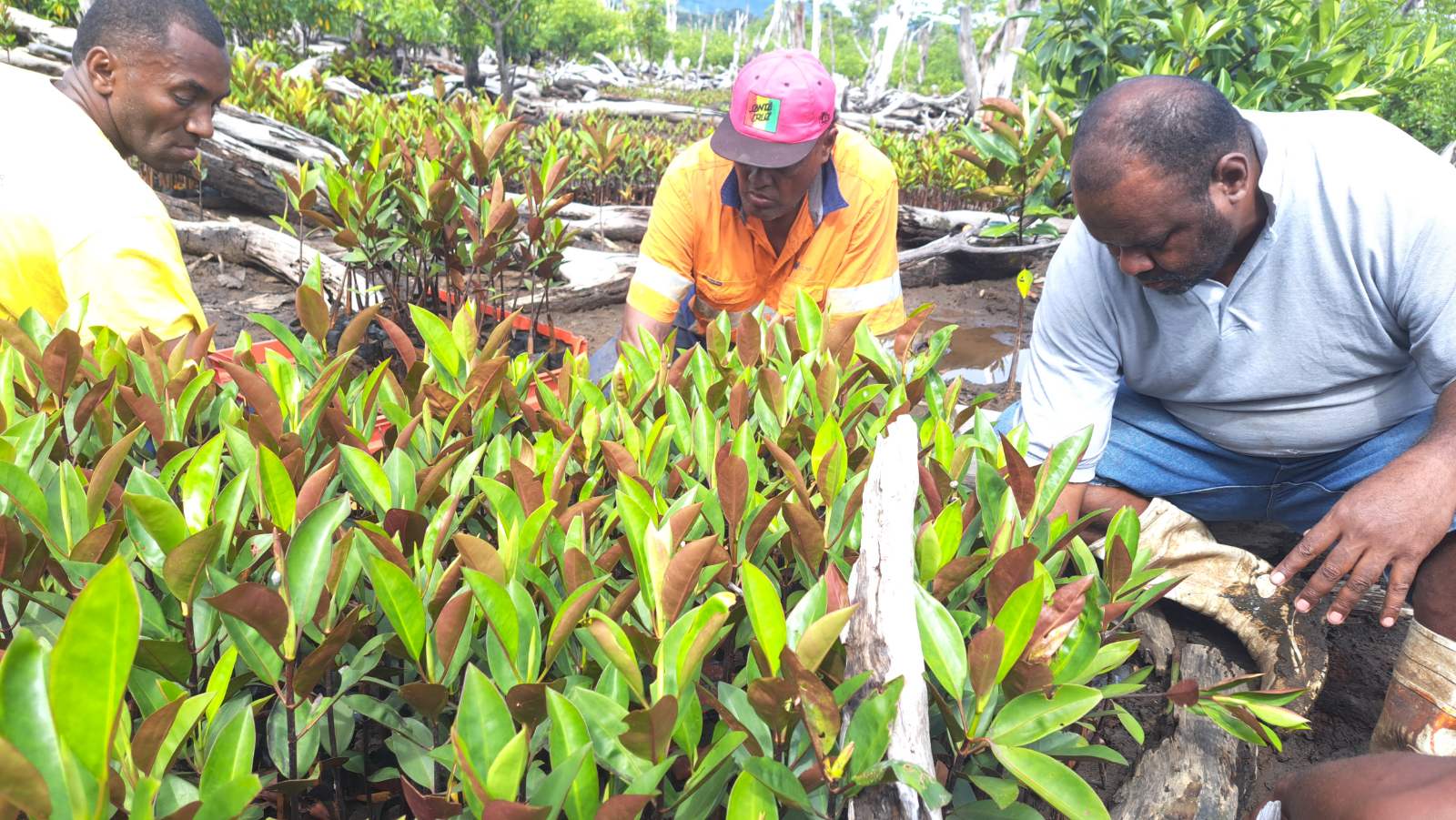
Navitilevu Bay is one of the project sites under the Kiwa Initiative’s RESTORE project, which is led by Conservation International. Since July 2024, nine hectares of mangroves have already been restored in Navitilevu Bay with support from the Fiji Blue Carbon Project.
Across the region, RESTORE is working to restore 200 hectares of degraded mangroves and transplant 80,000 coral fragments, in partnership with 30 communities in Fiji, Samoa and Timor-Leste.
The three-year-project focuses on Nature-based Solutions (NbS) to address the impacts of climate change – particularly through community-led restoration and management of mangroves and coral reefs, combined with sustainable economic activities that support local resilience.
For Setaita, the change is already clear.
“The mangroves are returning now, and so are the crabs. We can see it. That’s why I’m happy this project is focusing on mangroves. It brings back life – for us and for the sea,” Setaita says.
People first
RESTORE puts communities at the center. The project is built around supporting Indigenous Peoples and local communities with sustainable, income-generating opportunities. This includes training in beekeeping, community nurseries, aquaculture, and financial literacy – with a special focus on women and youth.
In Navitilevu Bay, these activities are helping people regain what was lost after the cyclone. For Setaita, the connection between mangroves and daily survival is clear. As a fish warden, she sees how a healthy coastline supports both biodiversity and livelihoods.
“Mangroves help with everything. They’re not just trees. They’re home to crabs and fish. They protect us when the seas are rough,” she says.
Learning across islands
RESTORE is also about sharing. More than 150 communities across Fiji, Samoa and Timor-Leste will receive practical toolkits and visual resources on mangrove and reef restoration. In Fiji, a regional exchange was held in Ra Province to bring together leaders and local champions to share their knowledge, stories and practices.
By creating spaces to learn from one another, the project strengthens regional connections and ensures traditional knowledge is not lost.
A quiet comeback
Along Navitilevu Bay, the comeback is quiet, but meaningful. Green shoots of mangroves are rising again along the shoreline. Crabs are crawling back into the mud. And people like Setaita are keeping watch.
“Mangroves protect us, feed us, and they’re part of our life here. It feels good to see them come back.”
On this World Mangrove Day, her story is a reminder: when communities lead the way, nature has a chance to heal – and so do we.
About the Kiwa Initiative
The Kiwa Initiative – Nature-based Solutions (NbS) for Climate Resilience aims to build the resilience of Pacific Island ecosystems, communities, and economies to climate change through NbS by protecting, sustainably managing and restoring biodiversity. It is based on simplified access to funding for climate change adaptation and biodiversity conservation actions for local and national governments, civil society, and regional organizations in Pacific Island Countries and Territories. The Initiative is funded by the European Union, Agence française de développement (AFD), Global Affairs Canada (GAC), Australia’s Department of Foreign Affairs and Trade (DFAT) and New Zealand’s Ministry of Foreign Affairs and Trade (MFAT). It has established partnerships with the Pacific Community (SPC), the Secretariat of the Pacific Regional Environment Programme (SPREP), and the Oceania Regional Office of the International Union for Conservation of Nature (IUCN – ORO).
Shreya Kumar is the Kiwa RESTORE Communications Officer.
This article was published in Wansolwara June/July 2025 edition.