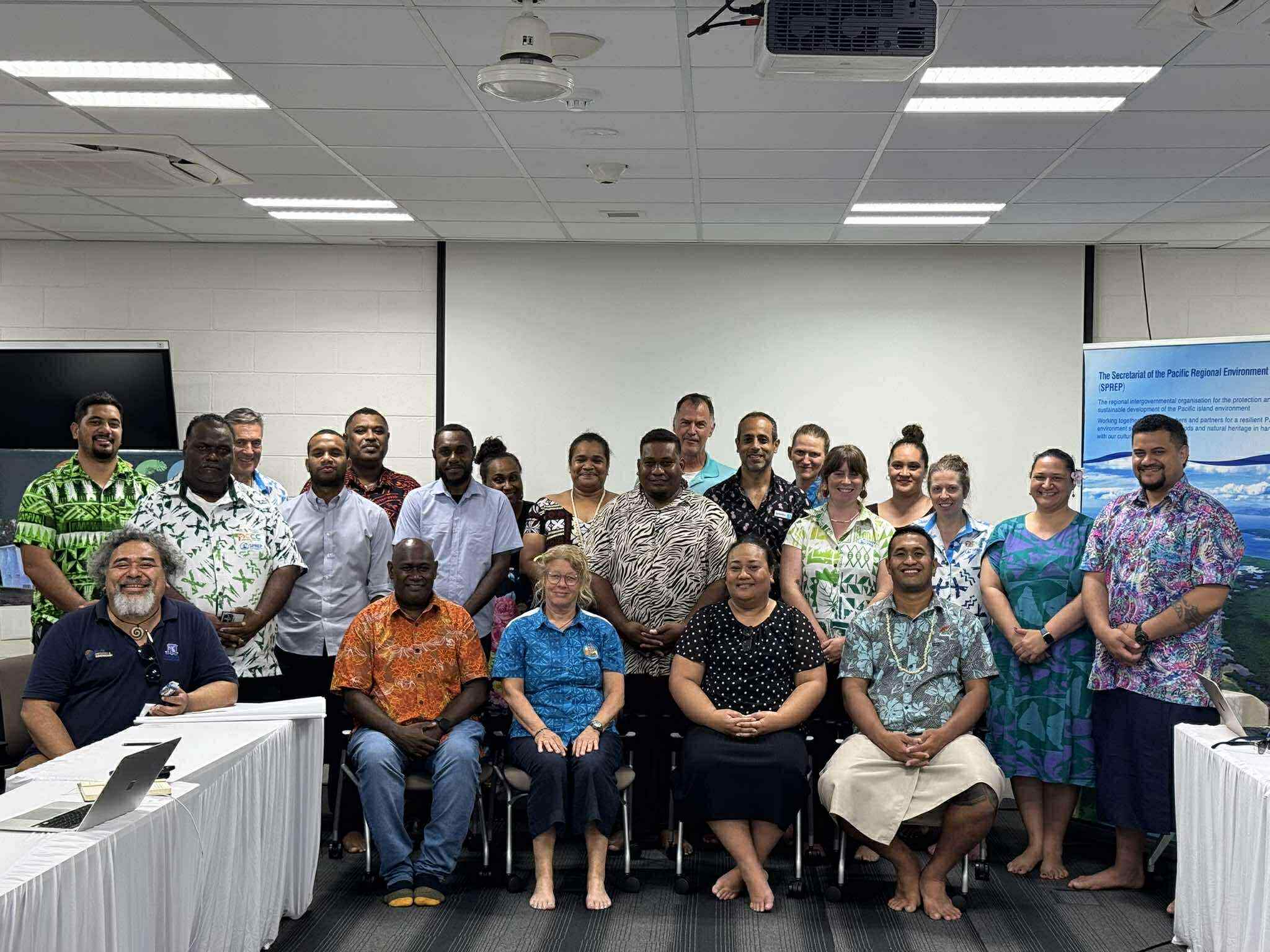
During the Pacific Ocean and Climate Crisis Assessment (POCCA) project revisit to Timor Leste, communities and stakeholders expressed their gratitude to the project for coming back to present the findings of the report.
In 2023, a team from the University of Canterbury, The University of the South Pacific’s (USP) POCCA project partner, visited Timor Leste as part of the community engagement to gather data on climate change adaptation and mitigation utilising their traditional knowledge and how it was being complemented by modern science.
With the revisit now to present the outcome of the community’s contribution, Founder and Director of the Timor Leste Organic Fertilizer (TILOFE) Zaquel do Carmo believes that the report will help inform policies towards the protection of communities in the fight against climate change.
“As the owner of Timor Leste Organic Fertilizer, an organization dedicated to assisting communities in adapting to climate change, I believe this report will be instrumental in guiding our policies.”
“The solutions implemented by other Pacific countries will serve as valuable references to support my community.”
In expressing his gratitude, the Director of Environment and Climate Change, Carlos Conceicao, said the information contained in the report about Timor-Leste and experiences from across the Pacific would assist in making informed decisions about addressing the climatic challenges they are facing.
“Thank you for this report. This information will guide us in making effective plans to address the challenges of climate change in Timor-Leste. Thank you for your support,” he said.
During the revisit, the POCCA team visited the communities of Estado, Railaco and Fatu-kero, who all expressed their gratitude to the project for capturing their input.
“The Estado community expresses its appreciation to the USP team for their visit and for sharing valuable information. We are grateful for your presence and support,” said Isak de Deus, Estado Community Representative.
“We are grateful for your cooperation. We hope that the reports presented will provide insights and encourage a shift in mindset towards transforming our products,” said Benny, the Railaco Community Representative.
Funded by the Ministry of Foreign Affairs (MFAT), New Zealand, the three-year POCCA project is a collaborative effort between the Pacific Centre for Environment and Sustainable Development (PaCE-SD) through The University of the South Pacific’s, Centre for Sustainable Futures (CSF) and the Macmillan Brown Centre for Pacific Studies at the University of Canterbury.