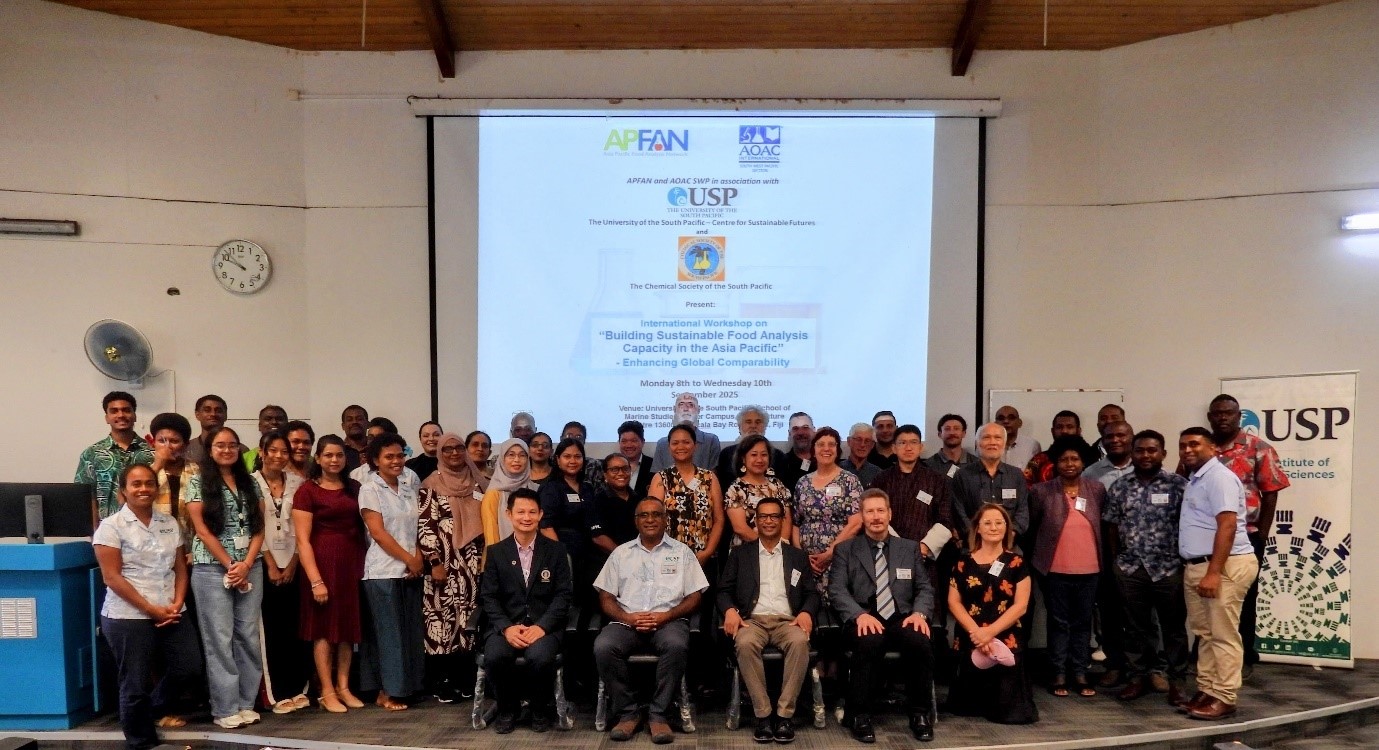
Experts from across the Pacific and Asia have gathered at the University of the South Pacific, Lower Campus, Marine Studies Lecture Theatre for a three-day workshop focused on improving food analysis, safety, and trade. The workshop runs from Monday, 8 September, 2025, to Wednesday, 10 September, 2025, and also marks the launch of the Association of Official Analytical Chemists (AOAC) South West Pacific Section.
“It is my privilege to welcome you to this APFAN 2025 workshop and the inaugural meeting of the newly formed AOAC South West Pacific Section,” said Stewart Jones, coordinator of APFAN. “This marks a significant milestone in our shared commitment to advancing food analysis, food safety, and food trade across the Pacific region. We are honoured to be part of this gathering of experts here in Fiji.”
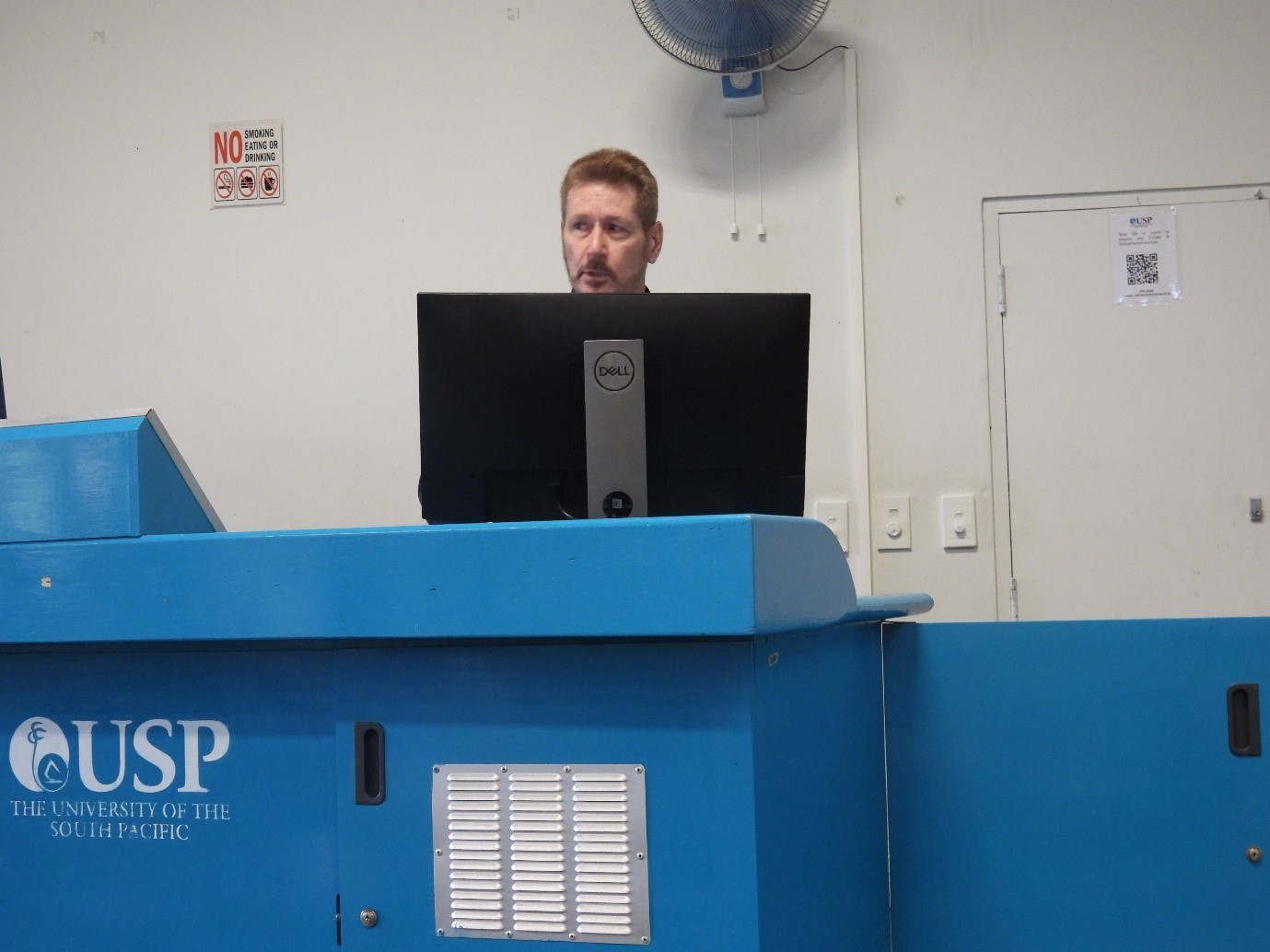
Mr Jones acknowledged the support of the workshop sponsors, without whom the event would not have been possible.
“Special thanks to Cole-Parmer, Shimadzu, Sciex, Kava Korp, and Sanitarium for making this workshop possible,” he said.
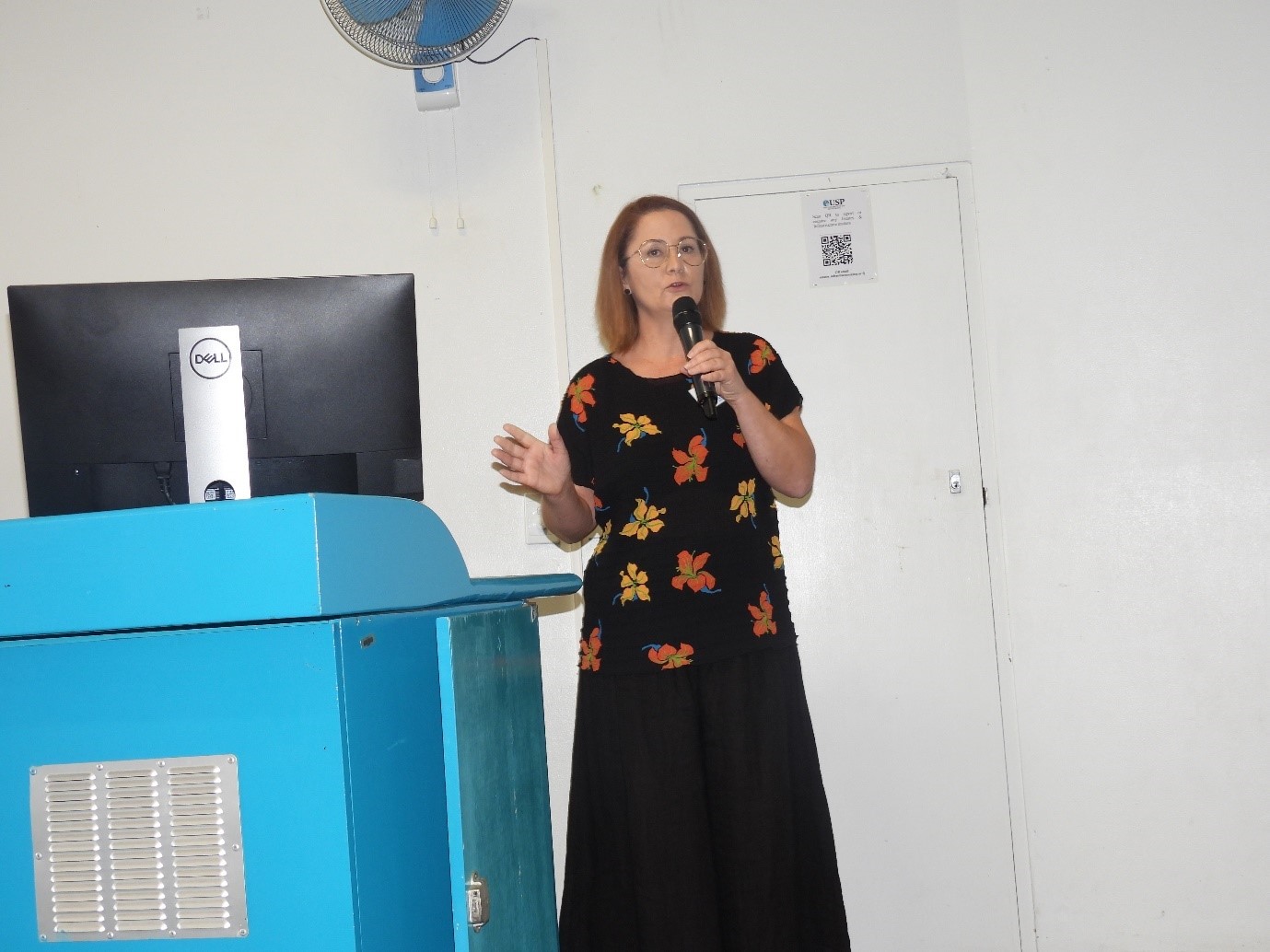
The Asia Pacific Food Analysis Network (APFAN), formed in 1989, serves the needs of food analysts in food safety and trade. Its current project provides laboratories access to inexpensive proficiency testing (PT) trials. Since 2018, APFAN has held four PT workshops across Southeast Asia. This workshop is the first APFAN PT event to be held in the Pacific.
“We have gathered experts from both Asia and the Pacific to advance group analysis, strengthen regional capacity, and continue building a network of cooperation,” he said.
The AOAC South West Pacific Section is the newest of 16 sections within AOAC International, an independent, non-profit association of analytical science professionals. Each section holds an annual meeting, and this event serves as the inaugural meeting of the South West Pacific Section. Mr Jones also thanked the Chemical Society of the South Pacific (CSSP) for hosting the section.
“This meeting matters to APFAN because the Asia-Pacific region conducts 42 percent of the world’s trade and houses 60 percent of the world’s population,” Mr Jones said. “It also matters to the Pacific region, where we have unique and diverse food systems. The AOAC South West Pacific Section is a dedicated platform for region-specific network development, and we share a mission to strengthen bilateral networks, harmonize standards, and promote scientific excellence.”
The workshop emphasizes the importance of accurate chemical and microbiological testing and regional equivalence of quality standards. Laboratories involved in testing food commodities are encouraged to adhere to ISO/IEC 17025 international standards.
Over the three days, participants from 11 countries including Malaysia, Thailand, Bhutan, Australia, New Zealand, Papua New Guinea, Solomon Islands, Marshall Islands, Federated States of Micronesia, Vanuatu and Fiji will discuss the harmonisation of validated methods, emerging technologies, regional priorities from contaminants and authenticity testing, and strategies for capacity building.
“Just as importantly, we will connect and discuss topical issues with international experts to continuously improve laboratory efficiency,” Jones said. “Let this meeting be the beginning of sustained collaboration. Share fully, engage generously, and ask good questions. Together we are shaping the future of food analysis in the South West Pacific.”
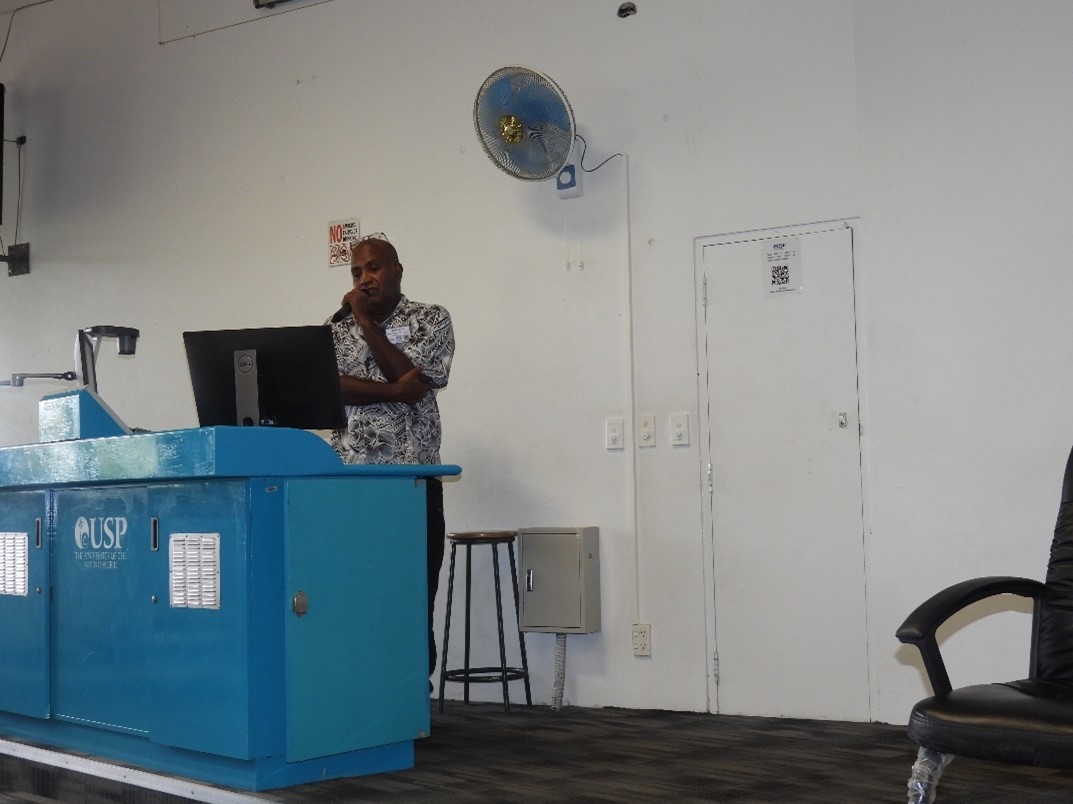
Dr Vincent Lal, Manager of the IAS Laboratory, Centres of Sustainable Futures at USP, and President of the AOAC South West Pacific Section, highlighted that the workshop offered a valuable opportunity to strengthen the region’s analytical capabilities. He added that IAS, as a USP-based laboratory, plays a key role in training and knowledge sharing across the Pacific.
Dr Isoa Korovulavula, Acting Director of the IAS, Centres of Sustainable Futures, USP in welcoming the participants, highlighted the urgent need for nutritional data on indigenous foods. He noted that the networking from this conference will help bridge those gaps and support food security initiatives that grew during COVID-19.
About APFAN
Founded in 1989, Asia Pacific Food Analysis Network provides food analysts in the Asia-Pacific with proficiency testing programs, training, and opportunities for collaboration.
About AOAC International
AOAC International is a non-profit association of analytical science professionals. Its South West Pacific Section, launched in 2025, strengthens regional networks and harmonizes laboratory standards.