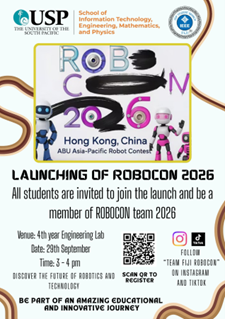
The University of the South Pacific’s School of Information Technology, Engineering, Mathematics and Physics (STEMP), in partnership with the IEEE USP Student Chapter, hosted the official launch of ABU Robocon 2026 on 29 September in the 4th year engineering lab. The event invited students from across disciplines to discover the future of robotics and encouraged them to join Team Fiji for the next Asia‑Pacific Robot Contest. The event poster emphasised the educational and innovative journey awaiting participants, with the 2026 contest set to take place in Hong Kong, China. A QR code was provided for registration and the “Team Fiji Robocon” social media channels were promoted to build community.
The launch opened with a welcome from organisers (Robocon 2025 Team) who thanked everyone for attending. Supervisor of Robocon USP – Dr. Imran Jannif introduced ABU Robocon, describing it as an annual Asia‑Pacific robotics competition in which university teams design, build and program robots to complete tasks inspired by cultural games. The contest encourages creativity, innovation and teamwork while offering hands‑on mechatronics experience and fostering knowledge exchange among future engineers. In the “History of Robocon in Fiji” session, presenters reviewed Fiji’s participation in past competitions, highlighting the country’s early involvement and its return to the contest after several years. They also brought out a demonstration robot to illustrate the kind of machines built by previous teams.
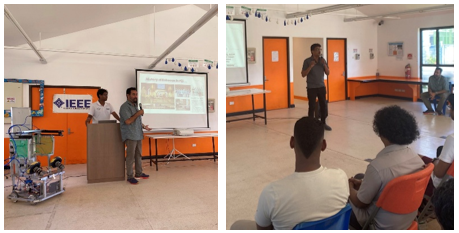
Organisers then outlined plans for Robocon 2026, whose theme will be based on Hong Kong. They explained the timeline for building the new robot, stressing the conceptual design, prototyping and procurement activities that need to occur between the start of the holiday period and Christmas. Afterward, the focus will shift to manufacturing, assembly and integration, with this phase running from early January until the end of the holidays. The final stage will involve testing, creating robot‑check videos and delivering the finished machine before the first month of the new semester.
Students were encouraged to attend bi‑weekly meetings beginning in Week 10. Two sessions were offered each week – Thursdays at 10 am and Mondays at 2 pm in the Robocon Room – to accommodate different schedules. Before attending, participants were asked to read the official rule book, think of ideas for robot subsystems and come prepared to contribute to discussions.
The Robocon 2025 Team further explained the team hierarchy and selection process. Roles within the team will be determined by interest and skill, and all members are encouraged to contribute ideas. Younger students who show enthusiasm and a willingness to learn may work on higher‑level systems. The final team travelling to Hong Kong will consist of three main competition members, who will operate the robot during gameplay, and three pit‑crew members who will handle repairs and quick maintenance. Members may join full‑time during the holiday period or part‑time while undertaking industrial attachments. Selection will be based on the effort and time invested throughout the design and build phases, not just attendance. Importantly, the Head of School (Prof. Bibhya) emphasised strategies to empower and encourage female STEM students to actively join and contribute to the team, as well as future events of similar calibre, highlighting the broader goal of strengthening female participation in engineering and robotics.
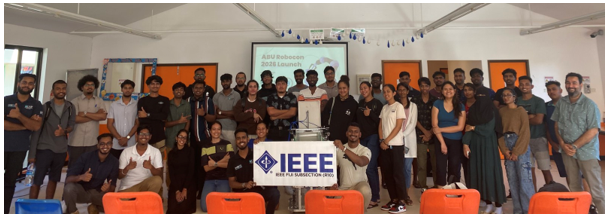
Throughout the launch, attendees listened intently to speakers and engaged in lively discussions. The presentations were supported by slides showing deadlines and project timelines, and there was an opportunity for students to ask questions. The interactive format helped demystify the competition for newcomers while providing veterans a forum to share expertise. The atmosphere was collaborative and encouraging, reflecting the community‑driven spirit of Robocon. At the end of the formal presentations, organisers hosted a Q&A session where students sought clarification on timelines, roles and expectations. After answering questions, everyone gathered for a group photo to commemorate the launch. Finally, refreshments were served, and participants mingled, strengthening connections among students and mentors.
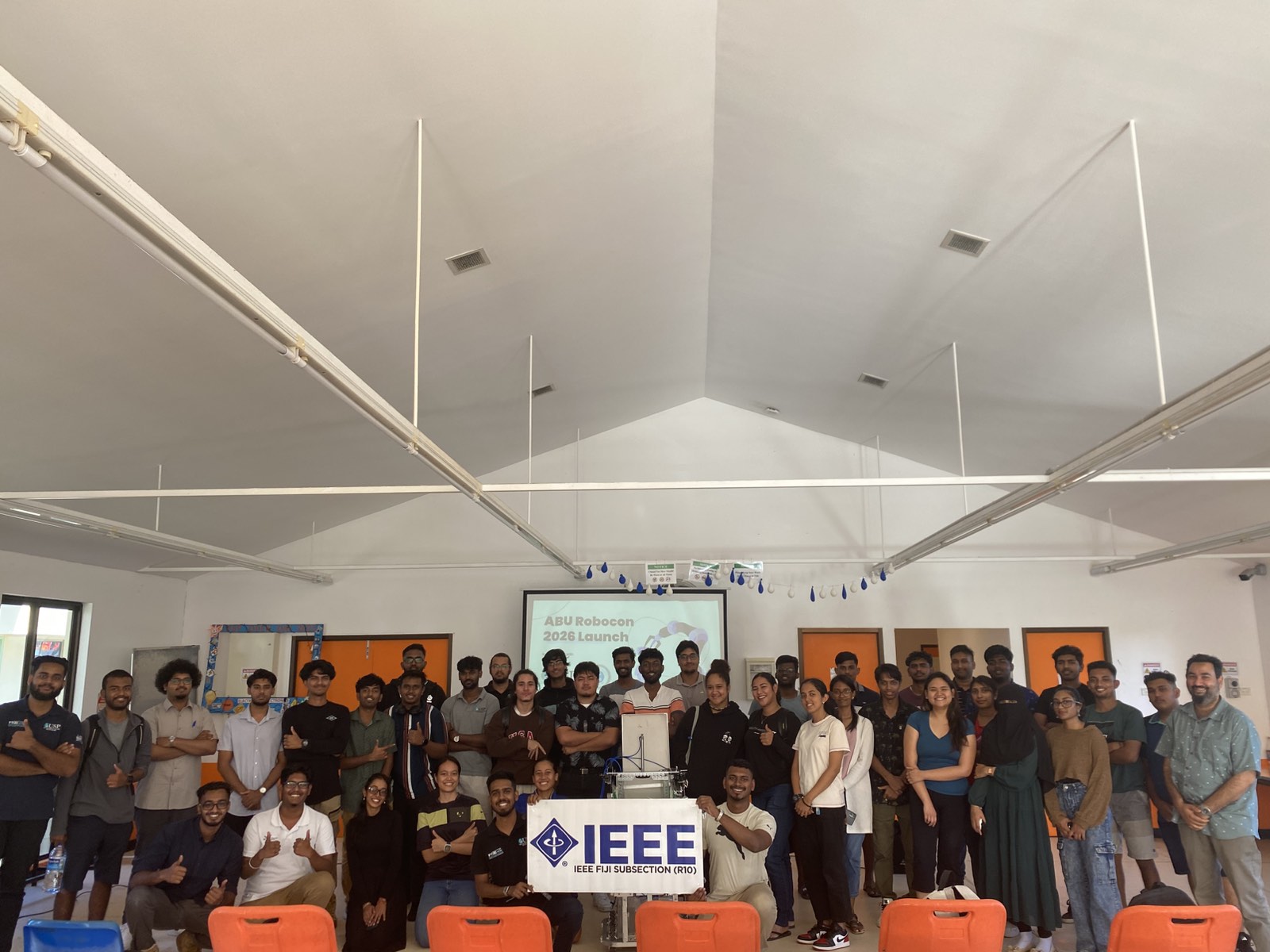
The Robocon 2026 launch event successfully informed and motivated students to join Fiji’s robotics team. By reviewing the competition’s purpose, celebrating last year’s achievements, and outlining the roadmap for the 2026 contest, organisers demonstrated both the challenges and rewards of participating. The clear timelines, regular meetings, and inclusive team structure provide a framework for students to develop engineering skills while working collaboratively. As the event concluded with a group photo and refreshments, it was evident that enthusiasm is building for an exciting and educational journey toward Robocon 2026.