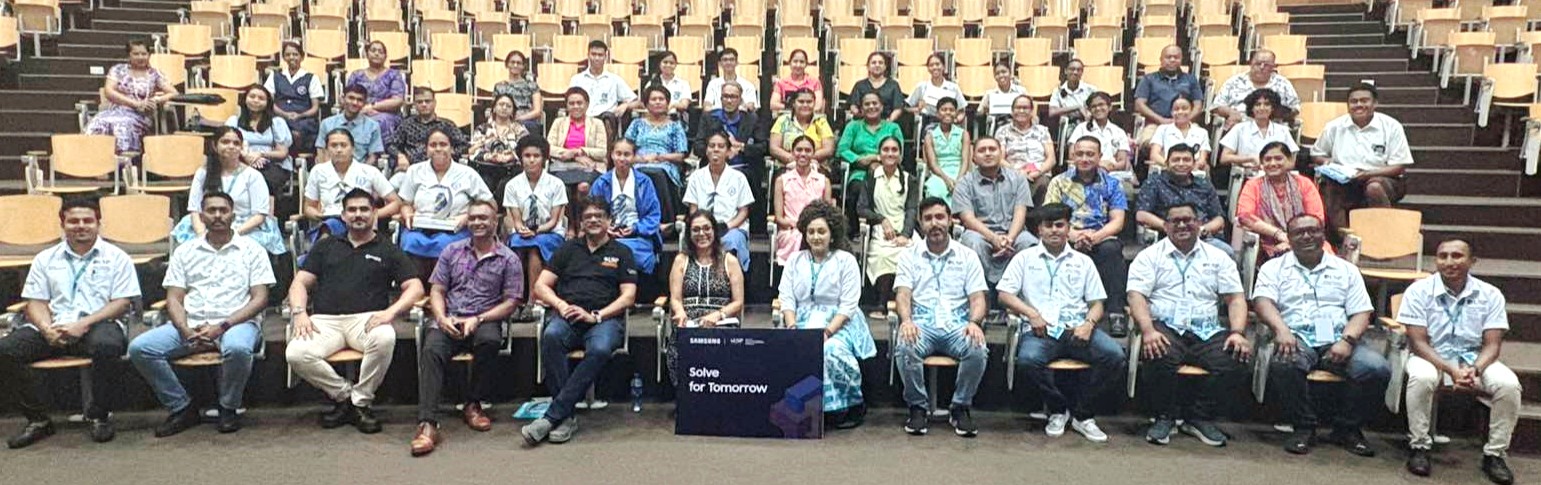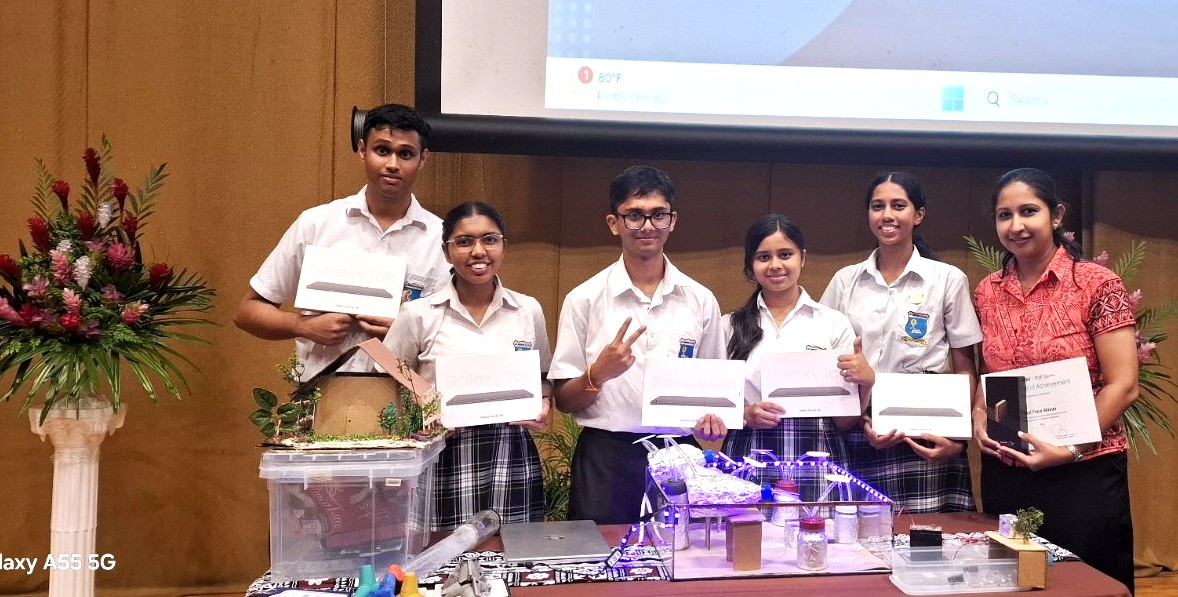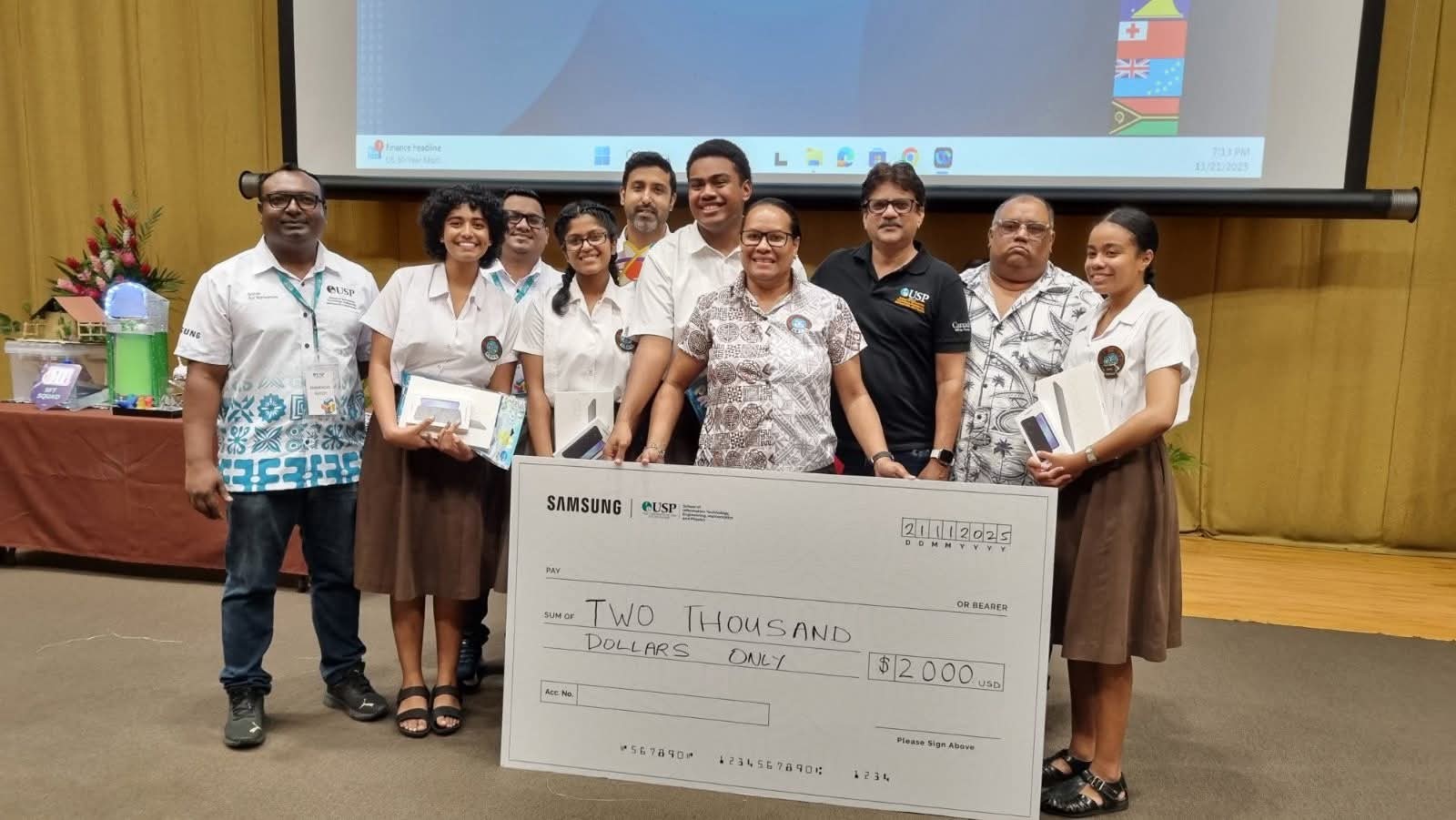
The University of the South Pacific (USP), in partnership with Samsung New Zealand, proudly hosted the Samsung Solve for Tomorrow Fiji Final Event & Awards Ceremony recently, showcasing the creativity and research-driven innovation of high school students across the country.
Held at the Laucala Campus, the event brought together teachers, industry partners, educators, researchers, and families to celebrate young Pacific innovators addressing real-world challenges through evidence-based solutions. Participating students presented prototypes and ideas aimed at tackling climate resilience, digital access, health system gaps, sustainability, and community wellbeing.
Chief Guest, Professor Gurmeet Singh, Head of the School of Business and Management (SBM) and Acting Deputy Vice-Chancellor & Vice-President (Research and Innovation), commended the students for their exceptional creativity and commitment to research-led problem-solving.
“Today, we are not merely celebrating a competition; we are celebrating ideas, curiosity, and the research mindset that drives meaningful change,” he said.
“Programmes like Solve for Tomorrow empower students to step into the world of applied research to ask questions, gather data, refine ideas, and create innovations that matter.
Professor Bibhya Sharma, Head of the School of Information Technology, Engineering, Mathematics, and Physics (STEMP) and Acting Head of the School of Agriculture, Geography, Environment, Oceans, and Natural Sciences (SAGEONS), highlighted the programme’s role in strengthening STEM engagement among youth, especially those in primary and secondary our schools.
“Solve for Tomorrow is a powerful example of how curiosity, creativity, and scientific investigation converge to prepare students for future careers in technology and engineering,” he said.
“The calibre of solutions presented today reflects the brilliance of our youth and the quality of mentorship provided by teachers, coordinators, and USP experts. We are proud to support a programme that motivates Pacific students to innovate for their communities and the planet.”
Representing Samsung Electronics New Zealand, Simon Smith, Head of Corporate Marketing, praised the creativity and purpose displayed by students and reiterated Samsung’s commitment to youth innovation in the Pacific.
“Solve for Tomorrow is a global initiative designed to empower young minds to think boldly and create solutions that make a difference. What we witnessed in Fiji is extraordinary true innovation, powered by curiosity and guided by real community need,” he said.
The Samsung Solve for Tomorrow Project 2025 concluded with great success, showcasing the ingenuity and commitment of Fiji’s future leaders. Secondary schools participated in the competition, harnessing technology, innovation, and sustainability to develop cutting-edge solutions for pressing community challenges.
Following the programme’s remarkable success this year, USP and Samsung have confirmed that the partnership is exploring opportunities to extend the Solve for Tomorrow initiative to additional districts in the near future, enabling even more students across Fiji to engage in STEM-focused, community-driven innovation.
Ms Priynka Sharma, Assistant Lecturer and Solve for Tomorrow Programme Coordinator from The University of the South Pacific emphasised the programme’s role in strengthening STEM culture.
“The level of engagement from students this year was exceptional. Programmes like this inspire confidence in our young people and show them that STEM is not only exciting but a powerful tool for community transformation,” Sharma said.
The competition tasked students with identifying significant issues within their communities and designing practical, technology-driven solutions that emphasis sustainability.
Saint Joseph Secondary School: “Benu Tuvanaki – Organized Rubbish” a smartbin solution designed to revolutionise waste collection and sorting. Utilises sensors and data connectivity to monitor fill levels, optimize collection routes, and encourage better user sorting through feedback.
Suva Grammar School: “Glow in the Dark Roadmarkings” Road markings made from recycled materials that glow in the dark. Enhances visibility on unlit roads while reducing waste through recycling.
Jai Narayan College: “Plastogen”, this converts waste plastics into useful resources such as fuel. Applies chemical or thermal processes to transform plastic waste.
Yat Sen Secondary School: “KOKI – Digital Learning App” – integrates education, health, and wellbeing into a digital platform. This focuses on community-oriented, technology-driven learning solutions.
What truly set the 2025 competition apart was the mandatory focus on sustainability.
Every proposal was evaluated not just on technological merit but also on its long-term environmental and social viability. The projects demonstrate that the next generation is acutely aware of the triple bottom line: People, Planet, and sustainable economic feasibility.
2025 Solve for Tomorrow Award Winners
First Prize – Yat Sen High School
Prize: USD $2,000, Samsung A-Series Smartphone, Samsung Galaxy Tablet.
School Coordinator: Samsung Galaxy Flip 6 and stationery for all participating students
Second Prize – Jai Narayan College
Prize: USD $1,500, Samsung Galaxy Tablet.
School Coordinator: Samsung Galaxy Flip 6 and stationery for all participating students
Third Prize – Saint Joseph Secondary School
Prize: USD $500, Samsung Galaxy Tablet.
School Coordinator: Samsung Galaxy Flip 6 and stationery for all participating students
The 2025 Samsung Solve for Tomorrow competition demonstrated the power of young Pacific innovators to create sustainable, technology-driven solutions for their communities. By combining curiosity, creativity, and practical research skills, these students are shaping the future of Fiji and the wider Pacific region.